Your Informational Overview to Choosing the Right Car Scissor Lift for Your Garage or Workshop
Highlights
- Scissor lifts offer efficient, space-saving access for vehicle maintenance and inspections.
- Choosing the right lift enhances safety and operational efficiency in automotive service environments.
Overview of Car Scissor Lifts
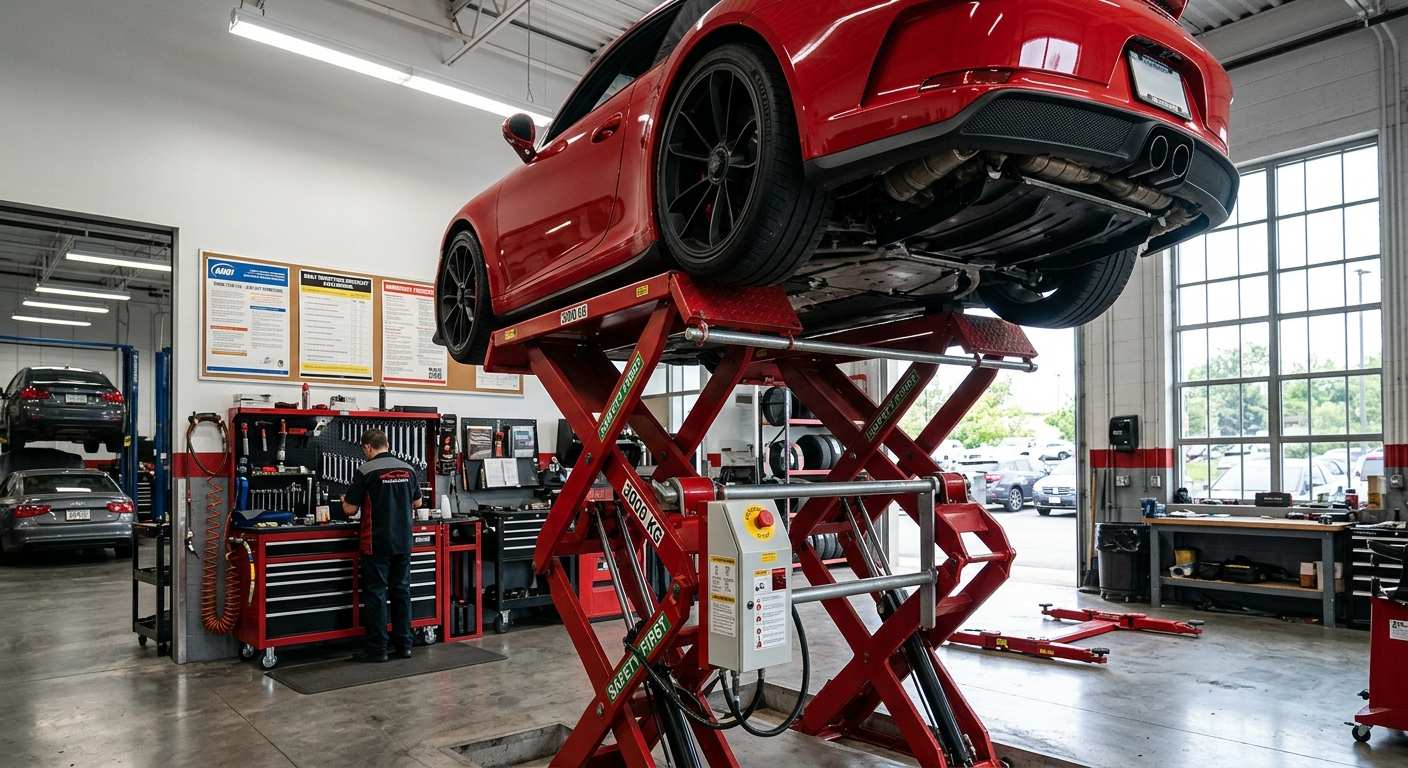
Car scissor lifts are specialized devices designed to lift vehicles vertically using a crisscross mechanism, making them essential tools in both home garages and professional workshop settings. Their compact design allows for efficient access to the vehicle underside for maintenance and inspections, particularly in spaces with height constraints. There are various types of scissor lifts tailored for specific operational needs, including mid-rise and full-rise models for different lifting heights, portable options for mobility, and heavy-duty variants for larger vehicles. Additionally, installation can be tailored with flush-mounts for unobstructed floors or surface mounts for easier relocation, informing buyers about how physical constraints may impact their choices.
Types of Scissor Lifts
Different types of car scissor lifts provide various advantages based on their intended use. Mid-rise scissor lifts are optimal for tasks like alignments and general repairs in workshops where space is limited. Full-rise lifts allow full standing access, making them ideal for extensive repairs in busy service areas. Portable lifts, although often lower in weight capacity, offer flexibility for small garage spaces. Heavy-duty lifts, designed for larger vehicles, incorporate robust lifting mechanisms to ensure stability and reliability during use. Understanding the type required based on vehicle weight, workspace configurations, and specific tasks can significantly enhance operational efficiency.
Key Specifications and Practical Considerations
When selecting a scissor lift, critical specifications such as load capacity, lifting height, and mobility features must be evaluated. Load capacities vary widely, with lighter models suitable for residential use and heavy-duty options supporting significantly greater weights, which is vital for ensuring safety. The required lifting height relates closely to the operational environment, particularly ceiling constraints found in some garages. Aside from the physical specifications, buyers should consider the installation demands and ongoing maintenance requirements, as the integrity and longevity of the lift rely heavily on adherence to proper procedures. Moreover, investing in certified models enhances safety, as regulatory compliance protects both users and businesses from liability risks.
Safety Features and Compliance
Safety is a paramount concern when operating car scissor lifts, with various built-in features intended to mitigate risks, such as guardrails and mechanical locks. Compliance with OSHA regulations and adherence to ANSI standards is essential for maintaining a safe working environment. Operators must undergo training and certification to fully understand operational controls, emergency procedures, and hazard awareness, as improper use can lead to serious accidents. Regular inspections and maintenance are required to ensure that all systems are functioning correctly and that safety mechanisms are intact, reinforcing the importance of following established protocols.
Cost, Budgeting, and Market Trends
Understanding the financial implications of purchasing a scissor lift involves assessing initial costs, installation requirements, and the potential for ongoing expenses related to maintenance. Equipment costs can vary substantially based on lifting capacity and features; hence, it’s prudent to budget for both immediate purchasing and long-term maintenance needs. With manufacturers like Katool, Titan Lifts, and Omer Lifts providing certified options, businesses may gain enhanced safety and efficiency. As market demand is increasingly influenced by regulations on safety and quality, investing in certified lifts is both a risk management strategy and a potential driver of greater operational value in automotive service environments.