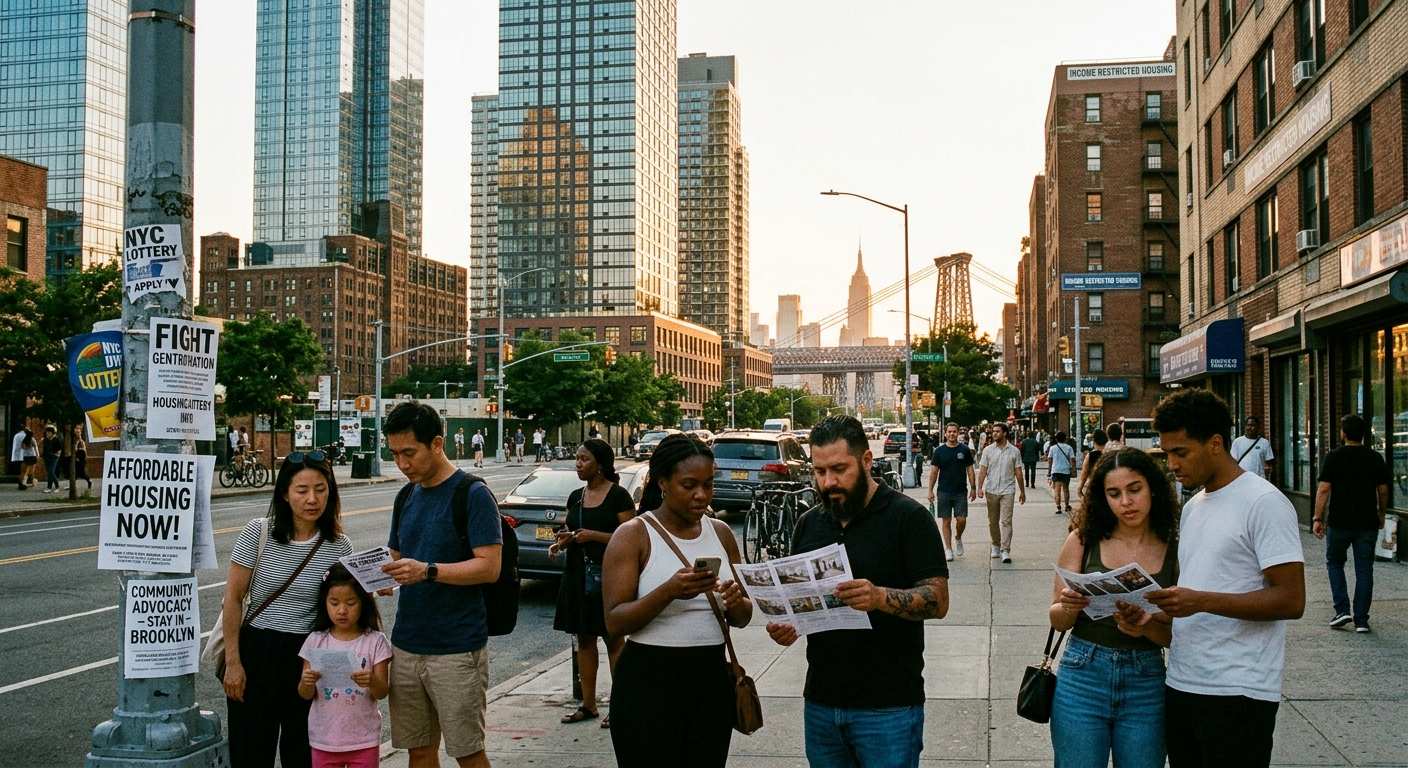
Highlights
- Williamsburg’s affordable housing lottery addresses rising rents and displacement challenges for residents.
- Stay informed on key developments and eligibility to access below-market-rate units in Williamsburg.
Williamsburg Housing Lottery Overview
The Williamsburg Housing Lottery serves as a vital means for allocating affordable housing in a rapidly changing Brooklyn neighborhood, which has seen both rezoning and gentrification since the early 2000s. This system enables below-market-rate rentals, primarily targeted at households earning between 60% to 130% of the Area Median Income (AMI). Essential developments include Williamsburg Wharf, 80 Ainslie Street, and 828 Metropolitan Avenue, with the NYC Housing Connect portal facilitating applications and maintaining transparency. Notable concerns include community discontent over displacement and reported disparities in unit allocation that may affect marginalized groups.
Eligibility Requirements and Application Process
Eligibility for the Williamsburg Housing Lottery is based on gross annual income and household size, with specific income thresholds varying per household composition. For instance, the maximum income to qualify for a two-bedroom at 80 Ainslie Street is set at approximately $238,160, significantly above Brooklyn’s median income. The selection process prioritizes current New York City residents, including individuals with disabilities, while preventing duplicate applications. Applicants submit to a lottery system through the centralized NYC Housing Connect portal. If selected, they will be invited for an interview to verify documentation related to income and household members.
Current Housing Opportunities
Numerous lotteries are currently available in Williamsburg, presenting potential housing solutions across various unit types. For example, 80 Ainslie Street features units available for households earning up to 130% of AMI, with monthly rents around $2,320 for one-bedroom apartments. Meanwhile, Williamsburg Wharf provides 55 affordable units for incomes reaching 80% of AMI, set between $75,532 and $140,000. The income eligibility criteria impose strict limits, yet a portion of the available units are reserved for families facing economic disadvantages, reflecting efforts to maintain inclusivity amidst neighborhood changes.
Legal and Data Security Concerns
Recent developments surrounding the Williamsburg Housing Lottery have raised significant legal and privacy issues. A data breach within the NYC Housing Connect system exposed sensitive applicant information, fostering calls for improved security measures. Moreover, legal challenges have emerged concerning the preferential treatment policies that may disadvantage applicants from specific racial and ethnic backgrounds. These issues highlight the necessity of transparency and equitable access within the lottery system to ensure all residents can navigate the housing process fairly.
Community Impacts and Adaptations
The evolving housing landscape in Williamsburg illustrates broader community dynamics and socio-economic tensions. While new developments aim to bridge the gap between luxury and affordable housing, there remain concerns about gentrification leading to displacement of long-time residents. The mixed-use and income-restricted housing initiatives have sparked debate over their effectiveness in genuinely addressing the local housing crisis. These developments underline the importance of balancing growth and affordability while safeguarding community diversity and cohesion.
The content is provided by Sierra Knightley, Scopewires