Highlights
- The Williamsburg Housing Lottery promotes fairness in allocating affordable housing amid high demand.
- Recent policy updates aim to streamline access, addressing ongoing challenges in housing equity.
Summary
The Williamsburg Brooklyn Housing Lottery serves as a critical avenue for accessing affordable housing in a rapidly changing neighborhood. The lottery allocates income-restricted rental units through a randomized selection process, aiming for fairness and transparency. Recent policy updates now permit applicants to bypass traditional lottery systems for certain re-rental units, reflecting an effort to address high demand and housing scarcity. The historic Williamsburg Houses, recently refurbished through a $490 million initiative under the Permanent Affordability Commitment Together (PACT) program, exemplifies progress in preserving affordability while enhancing living conditions. However, the lottery system faces challenges, including past allegations of discriminatory practices and high income thresholds that may alienate lower-income residents. Additionally, the potential expiration of Low-Income Housing Tax Credit (LIHTC) agreements poses risks to housing stability, increasing the urgency for equitable housing policies.
Lottery Structure and Application Criteria
The primary method for accessing affordable housing in Williamsburg is through the lottery system, where applicants are randomly selected to occupy available units. A recent policy change now allows direct applications for available re-rental apartments, enabling eligible renters to bypass the traditional lottery. For example, the Williamsburg Wharf development offers 55 affordable units for households earning up to 80 percent of the area median income (AMI), with eligible incomes ranging from approximately $75,532 to $140,000. The application process is managed via NYC Housing Connect, which requires a single application per household and prohibits duplications to maintain fairness. While the lottery system is designed to ensure transparency, applicants often encounter lengthy waiting periods and bureaucratic complexities after submission.
Community Impact and Ongoing Challenges
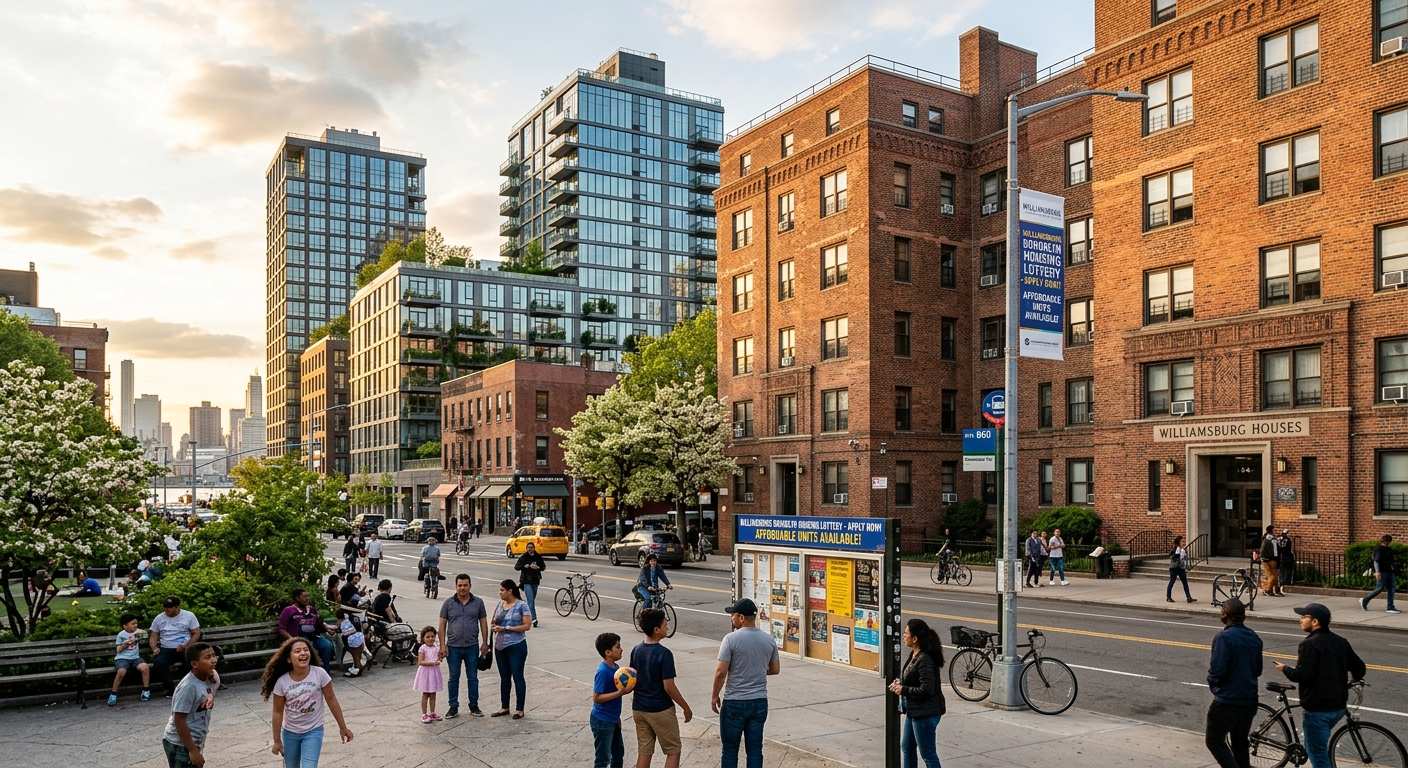
The revitalization of the Williamsburg Houses through extensive preservation efforts illustrates the balancing act between modern development and historical significance. This project, completed in late 2024, reaffirms the commitment to maintaining affordable housing within the neighborhood. Nevertheless, issues persist, particularly surrounding the expiration of LIHTC agreements, which may lead to significant rent increases for families on fixed incomes. Activism in the community has surged in response to mounting pressures from gentrification and the risk of displacement, highlighting a continued need for advocacy focused on preserving affordable housing and community identity.
Criticisms and Barriers to Access
The lottery system has faced significant scrutiny over claims of inequitable access. Allegations of discrimination were notably raised concerning developments like Broadway Triangle, suggesting an inadequacy in addressing the needs of diverse community demographics. Furthermore, many available “middle-income” units have income requirements that exceed realistic financial limits for local families, questioning the effectiveness of the lottery in serving its intended constituencies. Compounding these challenges are the long wait times for eligibility assessments and the bureaucratic hurdles that applicants must navigate, which disproportionately affect those with limited resources. Community advocates continue to emphasize the importance of reforming the system to better align with residents’ needs.
Future Developments and Strategic Initiatives
The Williamsburg housing landscape is evolving through significant investments and strategic initiatives aimed at improving housing quality and accessibility. NYCHA’s ongoing PACT program is directing funds toward extensive upgrades and repairs to public housing, including a $490 million renovation of Williamsburg Houses and several other notable projects across Brooklyn. Recent policy shifts also permit applicants to directly access re-rental opportunities, which may alleviate some pressures on the traditional lottery system. However, it remains critical to monitor the short- and long-term outcomes of these initiatives, especially concerning community inclusivity and housing stability for vulnerable populations. These developments signal a concerted effort to ensure that the needs of the diverse Williamsburg community are met amid ongoing changes.