Highlights
- Walk-in tubs enhance safety and comfort for seniors with mobility challenges.
- Explore alternative funding options to manage the costs of walk-in tub installations effectively.
Summary
Walk-in tubs enhance safety and accessibility for seniors and individuals with mobility issues. These tubs feature low step-in thresholds and built-in seating, minimizing fall risks. Professional installation is essential due to their complexity, and many models comply with necessary safety standards. Medicare coverage for walk-in tubs is limited, often considering them convenience items unless a medical necessity is documented, which requires careful review of insurance plans and eligibility.
Overview of Walk-In Tubs
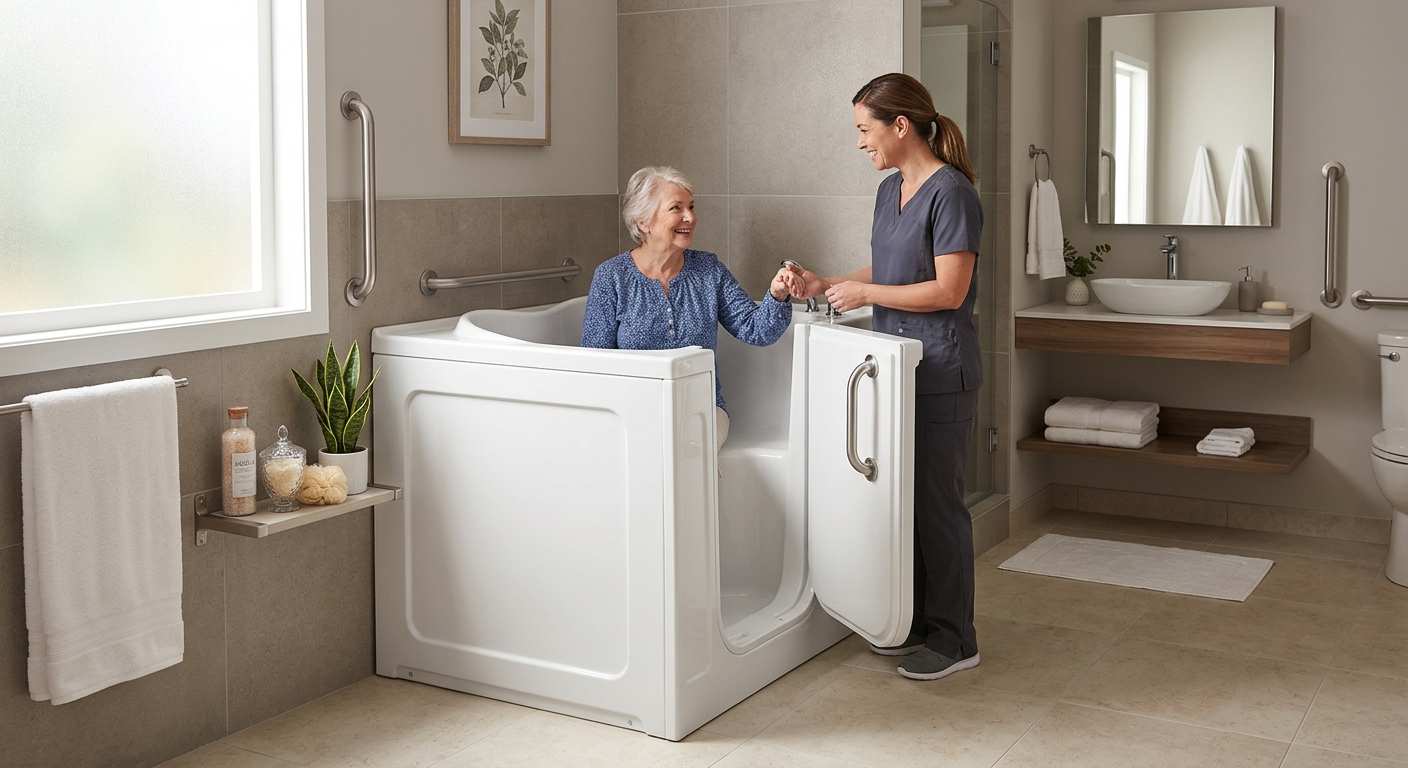
Walk-in tubs are tailored for safety, comfort, and accessibility. Their design, which includes watertight doors and built-in seating, allows users to enter safely without stepping over high edges. These tubs may also provide hydrotherapy features, enhancing their therapeutic benefits, but require professional installation to ensure proper function and safety adherence to multiple quality standards like ADA and UL.
Medicare Coverage Basics
Original Medicare typically does not cover walk-in tubs, classifying them as convenience items rather than medically necessary durable equipment. Even with a doctor’s prescription for medical necessity, reimbursement is not guaranteed. Medicare Advantage plans may offer coverage under supplemental benefits, but this differs widely among plans, necessitating thorough evaluation of individual plan documents to confirm coverage options.
Walk-In Tubs and Medicare Coverage Details
Coverage for walk-in tubs can be limited and varies significantly based on specific Medicare Advantage plans and state programs. Some states offer Medicaid waivers for medically necessary home modifications like walk-in tubs. Additionally, various federal programs, such as VA grants, can provide financial assistance for necessary home upgrades, highlighting the importance of exploring multiple funding sources.
Alternative Funding Options for Walk-In Tubs
For seniors, alternative funding options for walk-in tub installation include state and federal assistance programs like Medicaid HCBS waivers and the USDA Section 504 Home Repair Program. Veterans may also access grants for home modifications. Local organizations and nonprofits often provide additional resources, ensuring various financial avenues are available to assist with costs.
Federal and State Assistance Programs
Medicaid waivers in many states cover home modifications when medically necessary. Programs from the USDA support safety improvements through grants or low-interest loans for eligible homeowners. Additionally, veterans can access grants from the VA designed specifically for home adaptations, which can help cover the costs of installing walk-in tubs.
Local and Nonprofit Resources
Local Area Agencies on Aging often offer grants and referrals for home safety enhancements such as walk-in tubs. Nonprofits like Habitat for Humanity provide programs that connect low-income seniors with necessary home modifications. These resources play a critical role in improving accessibility and safety for vulnerable populations.
Financing and Payment Plans
If grants are insufficient, many retailers provide financing options to ease the financial burden of walk-in tubs. Exploring payment plans can make these modifications more manageable for seniors. Engaging with healthcare providers can also uncover local resources tailored to specific medical and accessibility needs.
Installation and Safety Considerations
Choosing a qualified installer is crucial for the safe and proper functioning of walk-in tubs, given their complex systems. Safety features such as low thresholds and watertight doors significantly minimize fall risks. Compliance with safety standards and local building codes is essential, ensuring the tub meets quality benchmarks and contributes effectively to user safety.
Cost and Financial Assistance
The cost of walk-in tubs ranges from $3,500 to over $20,000, including installation. While original Medicare generally does not provide coverage, some Medicare Advantage plans may offer assistance under specific conditions. Various federal, state, and local programs are available to help fund these modifications, making financial accessibility a key consideration for seniors.
Frequently Asked Questions
Does Medicare cover walk-in tubs?
Medicare generally does not cover walk-in tubs as they are considered convenience items. Coverage may be possible in rare cases of medical necessity with proper documentation. Medicare Advantage plans may have varied options for coverage based on specific plan terms and location.
Are there any financial assistance options for purchasing a walk-in tub?
Yes, low-income seniors can access grants and financial assistance to offset the costs of walk-in tubs. Some HUD programs offer up to $10,000 for home modifications, while manufacturers may provide financing options. It’s important to review terms carefully before committing.
What should I look for when choosing a walk-in tub and its installation?
Ensure that the hydrotherapy system is manufactured in high-quality regions and that components meet necessary certifications. Installer expertise is critical for proper installation. Verify that local support is available for service needs post-installation.
What are the regulatory requirements for walk-in tubs marketed in the U.S.?
Walk-in tubs must comply with specific regulations, including the Quality Management System Regulation for safety and effectiveness standards in manufacturing. Adhering to these regulations is essential for legal marketability and consumer confidence.
What is the difference between inward and outward swinging doors on walk-in tubs?
Inward swinging doors can provide a tighter seal against leaks due to water pressure, but the choice ultimately depends on space and personal preferences. Assessing individual bathroom layouts with suppliers can help determine the best option for safety and usability.