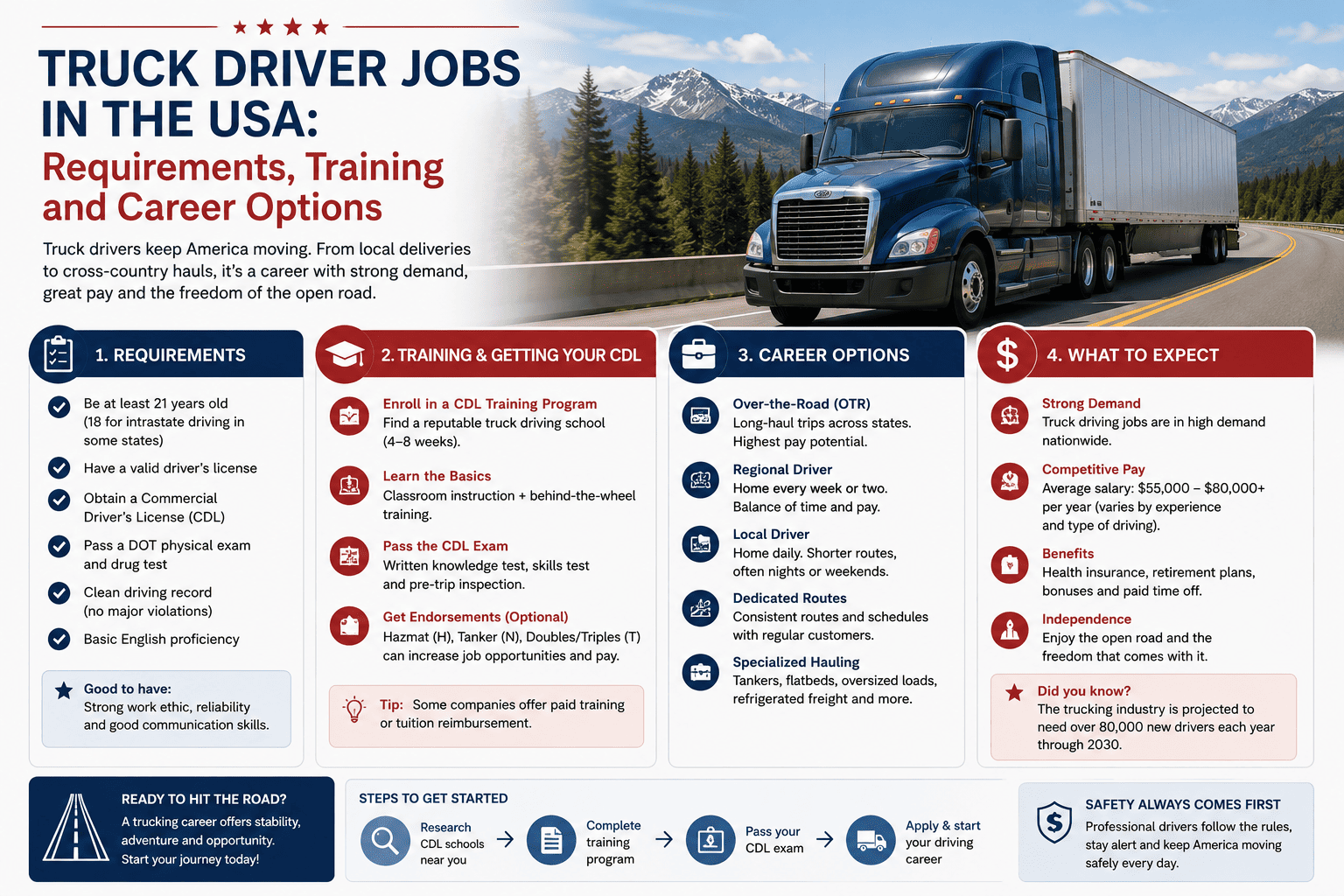
Truck driver jobs in the USA include local delivery, regional routes, long-haul work and specialized freight. Each path offers a different balance of home time, schedule, training and responsibility, so applicants should compare more than the advertised pay.
Most jobs involving heavy tractor-trailers require a Commercial Driver’s License, commonly called a CDL. Requirements vary by state, employer and vehicle type, but the process generally includes training, knowledge testing, supervised practice and a skills test.
Choosing a Truck Driving Career Path
| Job type | Typical work pattern | What to consider |
| Local driver | Shorter routes and frequent home time | May involve early starts, repeated stops or unloading |
| Regional driver | Routes within a multi-state area | Usually more home time than long-haul work |
| Long-haul driver | Multi-state routes and extended travel | More time away from home and variable schedules |
| Specialized driver | Tanker, refrigerated or hazardous freight | Additional endorsements may be required |
| Owner-operator | Runs an independent trucking business | Greater control but also fuel, insurance and maintenance costs |
Applicants comparing truck driver jobs in the USA should read each listing carefully. Two positions with the same title may differ in route length, unloading duties, equipment, home time and compensation structure.
CDL Requirements and Training
A first-time applicant for a Class A or Class B CDL generally must complete Entry-Level Driver Training through a provider listed on the FMCSA Training Provider Registry before taking the required skills test. The rules also apply to certain first-time passenger, school-bus and hazardous-materials endorsements.
The usual process includes:
- Reviewing the CDL rules in the applicant’s home state
- Obtaining a Commercial Learner’s Permit
- Completing required theory and behind-the-wheel training
- Passing the state-administered CDL skills test
- Meeting applicable medical and documentation requirements
Drivers must generally be at least 21 to operate a commercial motor vehicle in interstate commerce. Younger CDL holders may be permitted to drive within their state, depending on state rules.
People researching paid CDL training jobs should examine the agreement carefully. Employer-sponsored programmes may reduce upfront training expenses, but some require a minimum employment period or repayment when the driver leaves early.
Medical and Driving Requirements
Many commercial drivers must pass a Department of Transportation medical examination. When a driver meets the applicable physical qualification standards, a certified medical examiner issues a Medical Examiner’s Certificate.
Employers may also review driving history, safety records and drug-and-alcohol testing requirements. Applicants should confirm whether a role requires endorsements such as tanker, passenger, doubles and triples or hazardous materials.
Comparing Truck Driver Job Offers
Compensation may be based on hourly pay, mileage, route, load or delivery stop. A high advertised rate does not always produce the highest predictable income.
Before accepting an offer, compare:
- Guaranteed pay versus performance-based pay
- Paid or unpaid loading and waiting time
- Expected weekly mileage
- Home-time schedule
- Health and retirement benefits
- Sign-on bonus conditions
- Training repayment obligations
- Equipment and maintenance support
- Whether freight is touch or no-touch
Searching for local truck driver jobs may suit applicants who prioritise regular home time. Regional and long-haul positions may offer different routes, schedules and earning opportunities.
Career Development Options
Drivers may expand their opportunities by gaining experience, maintaining a safe driving record and adding endorsements. Specialized freight, driver training, dispatch, safety and fleet-management positions can provide career paths beyond standard driving work.
Some experienced drivers consider becoming owner-operators. This can offer more independence, but gross business revenue should not be confused with personal earnings. Truck payments, fuel, insurance, repairs, permits and unpaid administrative work can significantly affect the final income.
Those researching owner-operator trucking jobs should compare operating expenses, contracts and payment terms before purchasing or leasing a truck.
Final Considerations
Truck driving can offer several entry points and career paths, but the best position depends on the applicant’s licence, preferred schedule, travel tolerance and long-term goals.
Before enrolling in training or accepting a job, verify the training provider, understand the CDL requirements and compare the complete employment package. A suitable position should match both the driver’s qualifications and the lifestyle required by the route.
Requirements, job conditions and employer offers may change. Applicants should confirm current information with their state licensing agency, FMCSA and the hiring company.