Highlights
- Thrift store electronics offer budget-friendly options and promote environmental sustainability.
- Careful inspections and informed decisions can mitigate risks when buying secondhand technology.
Evaluating Thrift Store Electronics: Benefits and Inherent Risks
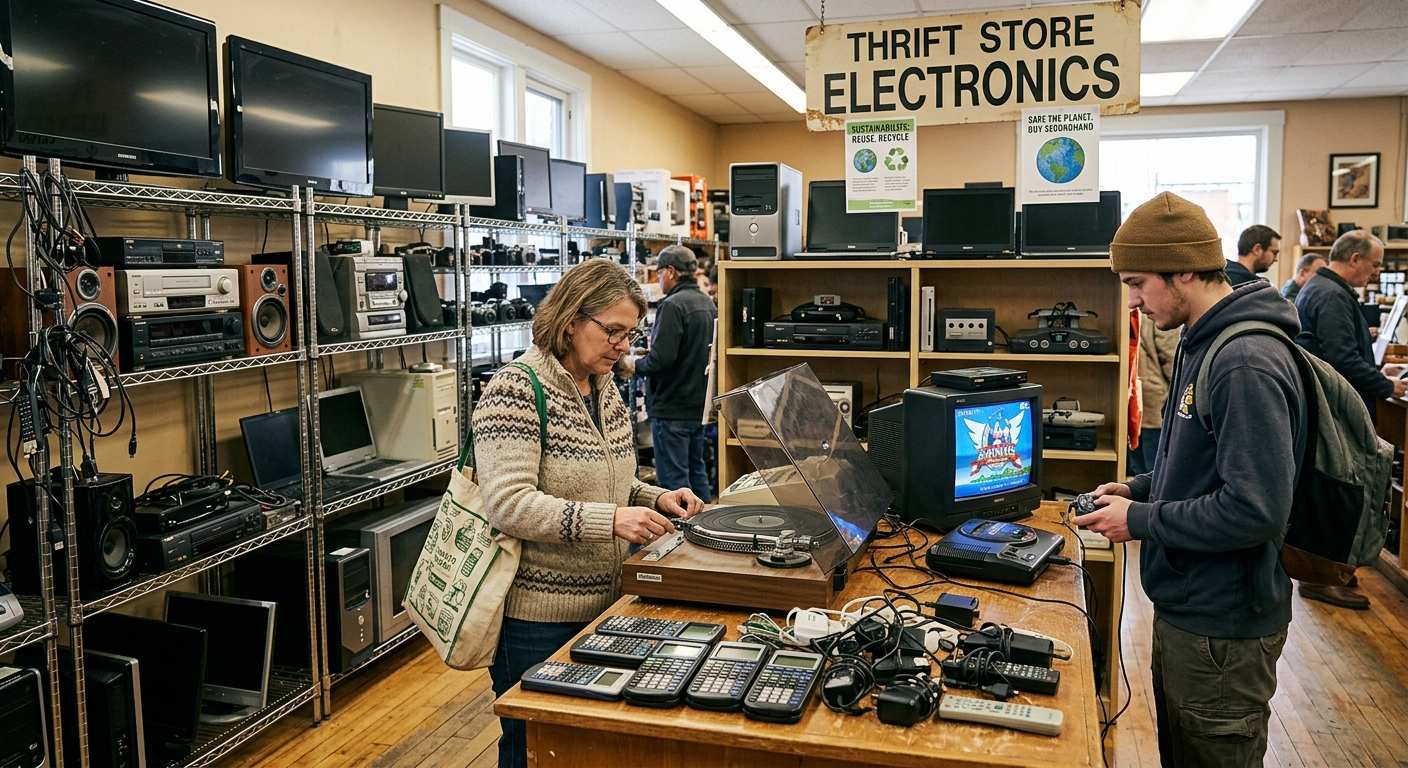
Thrift store electronics offer an accessible pathway to acquiring consumer devices at reduced prices, appealing to budget-conscious individuals and those prioritizing environmental sustainability. This approach helps extend product lifespans and reduces electronic waste, contributing to a more circular economy by diverting items from landfills. The variety of items ranges from common televisions and sound systems to computers, gaming consoles, and increasingly, modern technologies like smart home devices and virtual reality equipment, reflecting evolving consumer trends.
Despite these economic and environmental benefits, buying secondhand electronics presents notable challenges. Used devices may harbor hidden defects, lack essential components, or feature outdated technology that limits software support and security updates. The absence of standard warranties and variable return policies further complicates buyer protection, increasing the risk of unsatisfactory purchases and potential repair costs. Understanding these trade-offs is crucial for making informed decisions.
Assessing Physical Condition and Functionality
A thorough physical inspection is crucial for assessing used electronics, beginning with a detailed visual examination of the device’s exterior. Buyers should check the chassis, hinges, ports, screen surface, and keyboard for obvious wear, damage, or missing components like cords or buttons, as these can indicate underlying issues. Inspecting for corrosion, often visible as discoloration on leads or contacts, is also important, as it can result from improper handling or storage and may lead to premature component failure. Ensuring all parts are present and intact helps avoid costly repairs or unusable devices.
On-site functional tests are essential to verify operational status, with many thrift stores permitting customers to test items before purchase. For plug-in devices, confirming basic operation by powering them on is a primary step, and for battery-powered items, testing with available batteries or bringing your own is advisable. This systematic approach helps prevent bringing home defective devices that may appear functional but have critical internal faults.
Systematically evaluate key features such as display quality by checking for dead pixels, discoloration, or flickering against solid-colored backgrounds like white, black, red, green, and blue. More than three pixel defects, for instance, typically indicate a product that may not meet quality expectations. Assess audio components for volume, clarity, and distortion by playing sound, as good audio quality is a vital aspect of device performance. For laptops or similar devices, test the trackpad for smooth cursor movement and multi-touch gestures, while also verifying that physical click buttons function smoothly.
Connectivity features should also be tested where possible; for example, connecting to a known Wi-Fi network and performing ping tests can detect packet loss, with more than 20% packet loss potentially suggesting a damaged RF frontend. Testing all available ports and buttons ensures they respond properly and are not stuck or faulty, providing a practical baseline for assessing device condition. These checks can reveal intermittent faults that might not be apparent during brief use, aligning with recommended quality workflows for reliability.
Basic safety checks include assessing battery condition, as degraded batteries can lead to shorter usage or pose safety risks such as overheating. For smartphones, battery health can often be checked directly through device settings, while laptops may provide built-in diagnostic tools to assess battery cycles. Devices that overheat during charging should be avoided, as this could indicate battery damage or internal power issues that compromise safety and longevity.
Understanding Technical Limitations and Longevity
The rapid evolution of consumer electronics means older devices may face obsolescence, impacting their long-term usability and value. Understanding the product life cycle, from introduction to eventual decline, is essential when considering secondhand purchases, as the electronics industry continuously phases out older technologies. While an older device may appear functional, outdated technology can lead to a lack of software support, inability to receive critical updates, and increased security risks, including the potential for improperly wiped data from previous owners. These factors can significantly reduce a device’s effective lifespan and resale potential.
Used electronics are susceptible to various technical issues and hardware failures, ranging from physical damage to environmental factors like improper storage. Common problems include corrosion from moisture exposure, failures in moving parts such as belts or contacts, or intermittent faults in seemingly idle components like sound cards or motherboards. Such issues may not be immediately apparent during a brief inspection and can lead to unreliable performance or sudden, unexpected failure, requiring specialized diagnostic techniques to identify.
Buyers should also consider the potential cost implications of repairs, as fixing defects like broken screens or replacing proprietary parts can be prohibitively expensive. The lack of available skilled labor, specialized workspace, or specific parts for older models often makes repairs less economical than purchasing a newer device. Underestimating these potential costs is a common pitfall that can negate initial savings, making a seemingly good deal financially unviable in the long run.
Navigating Buyer Protection and Value
Thrift store electronics are frequently sold “as is,” meaning they often come with limited or no return opportunities and no standard manufacturer warranties. Return policies vary significantly between locations, making it essential for buyers to clarify specific return rights before purchase and retain receipts for any potential recourse. This lack of robust buyer protection places a greater onus on the consumer for thorough pre-purchase evaluation, as recourse for faulty purchases may be minimal or non-existent.
Verifying a device’s authenticity and history through its unique serial number or IMEI is a critical safety measure that can confirm warranty status and reveal if it has been reported stolen or blacklisted. Many manufacturers offer online tools for this purpose, and an unwillingness from a seller to provide the serial number or discrepancies in official records should prompt caution. Neglecting this step is a common buyer mistake that can lead to acquiring compromised or unsupportable devices.
Researching the model’s value and release year prior to purchase helps buyers assess whether the item is a worthwhile investment or an outdated model unlikely to retain value. Pricing for used electronics in thrift stores is influenced by factors such as item condition, brand reputation, rarity, seasonal demand, and local market competition. While prices are generally reduced, they may also be negotiable, particularly for items showing signs of wear or when purchasing multiple devices, offering further opportunities for savings. Understanding these pricing dynamics can aid in making a more informed purchasing decision, balancing cost savings with expected longevity and performance.