Highlights
- Same-day dental implants offer quick restoration of function and aesthetics in a single visit.
- Advanced innovations and careful patient selection enhance outcomes in this evolving dental procedure.
Same-Day Dental Implants: Overview and Key Considerations
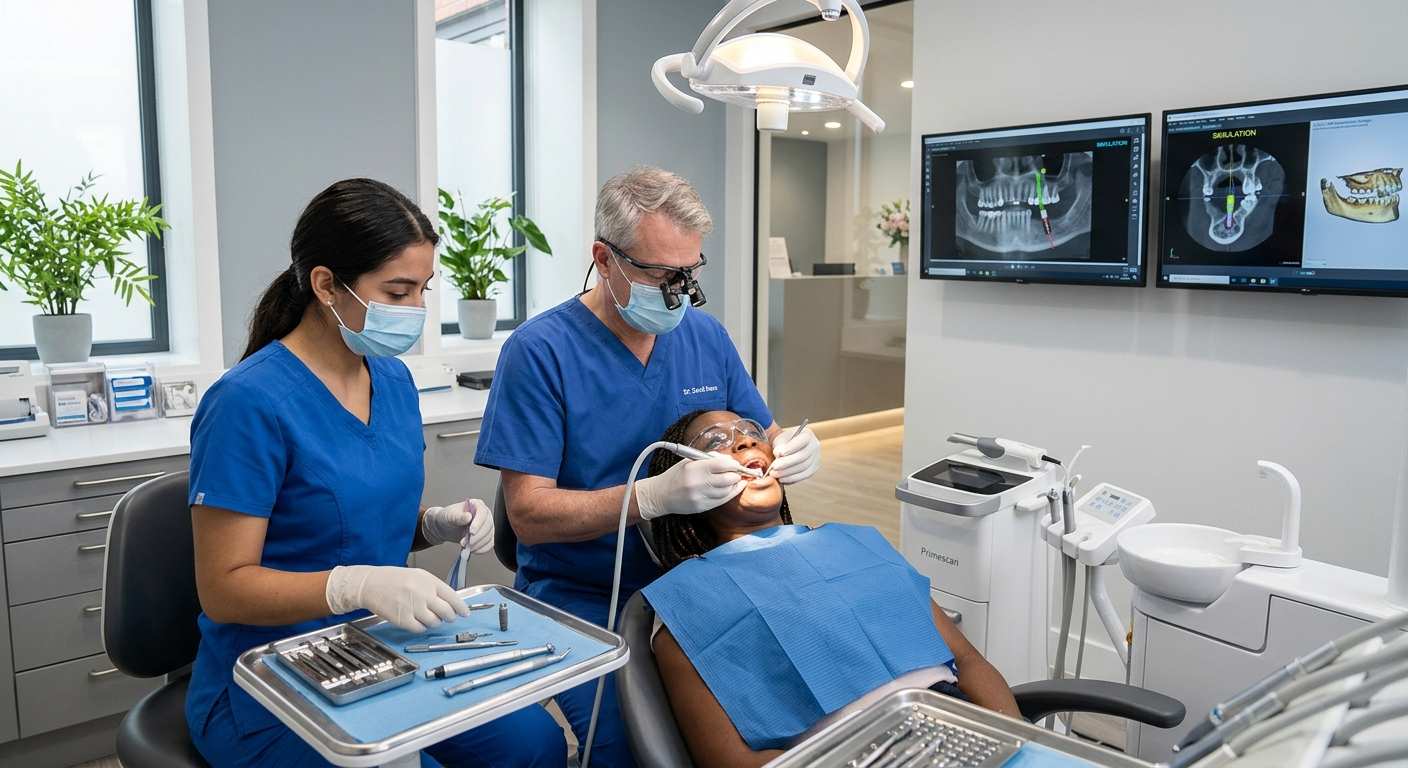
Same-day dental implants, often referred to as immediate or one-day implants, represent a rapid tooth replacement solution enabling patients to receive an implant and a temporary restoration during a single visit. This method is notably different from traditional protocols, which typically necessitate multiple appointments and a significant healing period before final restoration. The immediate approach enhances patient comfort and aesthetics while substantially reducing treatment time. Following tooth extraction, a titanium or zirconia implant post is placed into the jaw, with advanced digital technologies like computer-aided design and manufacturing (CAD/CAM) facilitating the creation of provisional crowns or full-arch prosthetics.
Popularity for same-day implants stems from their ability to restore oral function swiftly and improve psychological well-being by reducing the duration of toothlessness. Techniques range from immediate loading for single-tooth replacements to comprehensive solutions like the All-on-4 method, where four strategically placed implants uphold a complete arch of teeth, often bypassing the need for bone grafting in patients with diminished bone density. Continuous advancements in material sciences and surface modifications enhance osseointegration and the long-term stability of these implants.
Patient Selection and Suitability Factors
While same-day dental implants offer numerous advantages, their application is not universally appropriate. The selection process involves a critical assessment of bone quality, systemic health, and lifestyle considerations to minimize complications such as implant failure. Patient candidates must exhibit sufficient bone density for stability and lack contraindicating health issues—such as immune disorders—that might impair healing. Other factors influencing candidacy include lifestyle habits like smoking, which can adversely affect osseointegration.
Material choice also plays a significant role; titanium remains prevalent given its mechanical strength and biocompatibility, while zirconia offers an alternative for aesthetic preferences or metal allergies. Immediate loading techniques require careful case selection and clinical judgment, as premature mechanical stress can jeopardize osseointegration. Provisional restoration designs are critically shaped to minimize occlusal loading during early healing, with definitive restorations typically completed after a period of osseointegration.
Advantages and Limitations of Same-Day Implants
The primary benefit of same-day implants lies in their ability to consolidate the various stages of the traditional implant process into a single visit, drastically minimizing treatment time and enhancing overall patient convenience. This significant reduction in appointments can facilitate a smoother and less disruptive experience for patients needing urgent dental solutions. Additionally, technological advancements in planning and execution, alongside refined implant surface treatments, bolster osseointegration and quicken recovery, thus resulting in strong and functional restorations.
However, this expedited nature may introduce a slightly heightened risk of complications, including nerve damage or excessive bleeding, particularly in cases where immediate loading is employed. Patients may experience post-operative discomfort and swelling, often more pronounced than in conventional implant procedures. Clinicians must weigh benefits against the potential for complications, thereby ensuring appropriate patient selection and adherence to best practices.
Cost Factors and Insurance Coverage
Costs associated with same-day dental implants can vary significantly based on case complexity, the number of teeth involved, and supplemental procedures needed, such as tooth extractions. Materials chosen for implants also play a vital role in determining total costs, culminating in bespoke treatment plans tailored to individual needs. While same-day procedures offer the advantage of rapid completion compared to traditional methods that may span several months, certain advanced techniques may not be covered adequately by insurance plans, particularly if they involve cutting-edge technologies or custom procedures.
Patients may face challenges with accessibility, given that many dental plans do not cover the complete scope of advanced restorative options. Awareness of such limitations is crucial for patients who may equate cost concerns with delaying necessary dental treatment. Coordination with dental professionals can aid in addressing these financial aspects effectively.
Innovations Shaping the Future of Same-Day Dental Implants
Recent developments in same-day dental implant technology highlight advancements in materials, techniques, and digital methodologies aimed at improving treatment outcomes. The integration of CAD/CAM systems promotes heightened precision and customization in implant procedures, reducing the time from planning to execution and enhancing patient experiences. Innovations in material engineering, such as the emergence of zirconia and titanium-zirconium alloys, provide enhanced aesthetics and tissue compatibility, offering expanded options for personalized treatments.
Surface modifications enhance the effectiveness of implants by fostering better bone integration through bioactive and hydrophilic treatments. Future trends suggest a growing role for artificial intelligence and robotic-assisted surgeries that could improve overall surgical accuracy and outcomes. While these innovations present exciting prospects for the field, ongoing clinical validation and patient education will be essential in addressing concerns about the safety and efficacy of new technologies.