Highlights
- Police impound auctions in 2026 offer potential savings but require careful research and inspection.
- Understanding auction rules and regional regulations is crucial for successful participation and bidding.
Summary
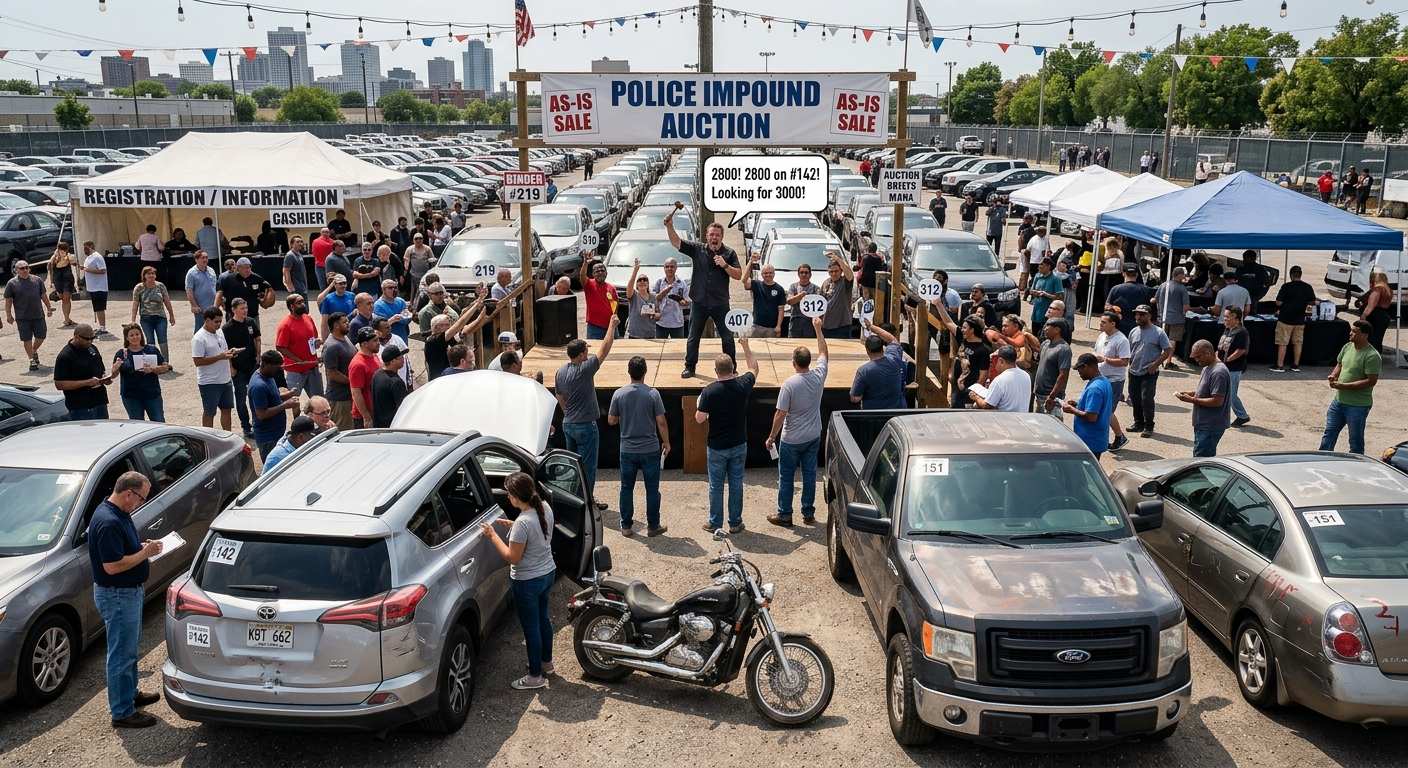
Police impound auctions in 2026 are sales events for vehicles and items seized or abandoned by law enforcement. These auctions provide opportunities to purchase a range of vehicles, typically at lower prices, but many are sold “as-is” and may require significant repairs. Potential buyers should be cautious since items sold often include hidden damages or incomplete histories, and sales are final, necessitating thorough inspections and diligent research.
Overview
These auctions serve to clear storage lots and recover fees, featuring vehicles seized from criminal investigations, accidents, or parking violations. The selection can include everyday cars to higher-end models, but many vehicles may lack keys or need extensive repairs. It’s crucial to inspect any vehicle of interest thoroughly prior to bidding, considering that test drives are usually not allowed and that understanding auction rules is essential for participation.
Types of Vehicles Available
In 2026, the vehicles at police impound auctions range widely, from sedans and SUVs to motorcycles and heavy equipment. Vehicles may stem from repossessions, traffic impoundments, or criminal cases, with many auctions run by federal agencies like the U.S. Marshals and the GSA. Buyers should be aware of the varying condition of motorcycles available and familiarize themselves with related auction processes and local regulations.
Vehicle Conditions at Auctions
Vehicles at these auctions can vary significantly in condition, with many sold “as-is” and often bearing salvage titles. Surface imperfections are common and can often be addressed with affordable repairs, while mechanical issues may incur substantial costs, affecting safety and drivability. Prospective buyers are advised to carefully review condition reports and conduct inspections to assess risks before participating.
Auction Organization and Management
Auctions are organized by various government agencies and can be held online or in-person. Platforms like GovDeals provide listings with detailed descriptions and photography of auctioned vehicles. Bidders must adhere to specific regulations and payment policies, which include prompt payment within set timeframes, as late payments can lead to legal issues or bans from future auctions.
Auction Participation
To participate, bidders must register, usually required to provide identification and potentially a deposit. Only registered bidders can participate in auctions, which are legally binding contracts. Understanding the auction format, including registration procedures, inspection opportunities, and required payment methods, enhances the likelihood of a successful purchase while mitigating risks associated with non-compliance.
Auction Procedures
Bidders need to follow outlined procedural steps, starting with registration on the auction day and ensuring they’re prepared to bid legally. Auctions may vary in format, operating online or in person, with all bids considered binding contracts once accepted. It’s crucial to inspect vehicles carefully before bidding due to the finality of sales and the fact that vehicles are often sold with significant issues.
Payment and Vehicle Claiming
Successful bidders must be ready for immediate payment, which varies by the winning bid amount. Prompt payments are essential, as many vehicles require full payment by the next designated time. Buyers should be aware of the time constraints involved in claiming vehicles, as failure to collect can result in losing ownership rights.
Inspection and Due Diligence for Buyers
Conducting thorough inspections and obtaining vehicle history reports before bidding are critical steps for potential buyers. Understanding past incidents associated with the vehicle—including repairs or other claims—can help assess overall value. When in-person inspections are not possible, arrangements for professional inspections are advisable to avoid unexpected post-purchase issues.
Risks and Considerations for Buyers
Purchasing vehicles at these auctions involves various risks, including hidden mechanical problems and the finality of sales, meaning buyers should incorporate anticipated repair costs into their budgets. Potential legal entanglements and limitations on warranties mean buyers should ensure compliance with relevant regulations, as failing to honor purchase agreements can lead to bans from future auctions.
Strategies and Tips for Successful Bidding
To maximize success at police impound auctions, preparation is key. Research vehicle conditions beforehand and take advantage of inspection opportunities to assess potential purchases. Understanding the bidding process and estimating total costs, not just the bid price, ensures informed decision-making, which aligns with budget and expectations for repairs and fees.
Resources for Buyers
Utilizing resources such as auction platforms and vehicle history reports can facilitate a smoother buying process. Buyers should stay informed of potential additional costs like buyer’s fees and mechanical repairs. Being aware of inspection policies and required documentation for vehicle release further enhances the purchasing experience and mitigates unexpected complications.
Comparative Overview of Regional Practices
Regional differences in police impound auction practices exist, influenced by local legislation and law enforcement policies. Some areas mandate specific timeframes for reclaiming impounded vehicles, while others vary significantly in auction procedures and community engagement. Understanding these local variations is essential for potential buyers, as regulations impact accessibility and compliance for auction participation.
Case Studies and Examples
Case studies highlight the range of conditions and challenges buyers may face. For example, some buyers may locate vehicles in good condition, while others face significant repairs. Being financially prepared and understanding the competitive nature of these auctions aids buyers in making informed decisions, while legal avenues exist for individuals confronting hardship from impoundments, demonstrating the complexities beyond the auction environment.