Highlights
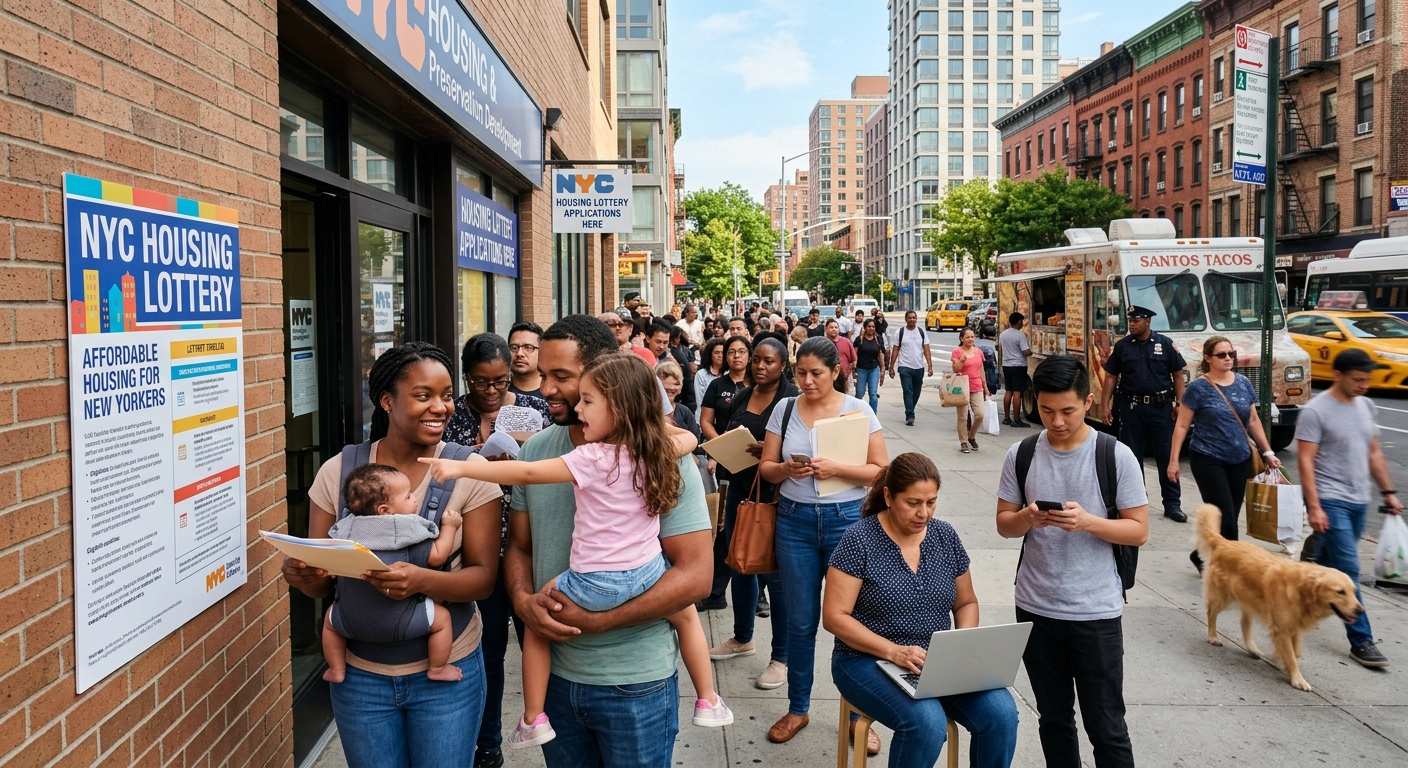
- The NYC Housing Lottery offers affordable housing to low- and moderate-income New Yorkers through random selection.
- Recent reforms aim to streamline processes, enhancing access to critical housing resources for applicants.
Overview of the NYC Housing Lottery
The NYC Housing Lottery is a program designed to provide affordable rental and homeownership opportunities to low- and moderate-income residents through a randomized selection process. Managed by the Department of Housing Preservation and Development (HPD), in partnership with the Housing Development Corporation (HDC), the lottery focuses on income-restricted units in private developments, contrasting with public housing from the NYC Housing Authority (NYCHA). Eligibility is determined by income, household size, and correlations with the Area Median Income (AMI), accommodating diverse applicants, including non-citizens.
This program aims to address New York City’s pressing affordable housing crisis by distributing thousands of units annually across its boroughs. While applicants must navigate the online NYC Housing Connect platform to access rental opportunities linked to AMI percentages, they often encounter challenges including lengthy waitlists and complex eligibility criteria. Recent reforms, initiated under Mayor Zohran Mamdani’s administration, have sought to reduce processing delays and enhance efficiency, targeting a cut in time between construction completion and tenant move-in from over 200 to fewer than 100 days.
Eligibility Criteria and Application Processes
Eligibility for participating in the NYC Housing Lottery varies based on specific program rules regarding income and household size, with limits typically ranging from 30% to 165% of AMI. Applicants need to document their income, and more stringent requirements often apply in federally funded programs like Section 8, which impose stricter immigration criteria. While many local initiatives allow mixed-status households to apply, eligibility hinges on documentation, including past rental history and alignment with unit sizes appropriate to household needs.
The online application process through NYC Housing Connect allows applicants to create profiles reflecting their circumstance. This platform enables instant application submissions, although competition can lead to long wait times, averaging around 142 days. Applicants are encouraged to respond quickly to document requests to maintain their position in the application queue and can apply to multiple lotteries to optimize their chances.
Current Challenges and Criticisms
Despite numerous reforms and improvements aimed at enhancing the NYC Housing Lottery, significant challenges remain. Issues such as prolonged waiting periods, the complexities of application processes, and the inherent randomness of the lottery contribute to frustrations for many applicants. The system’s uneven accessibility raises concerns about equitable housing distribution, particularly for underserved communities experiencing instability.
Recent active reforms, including the SPEED Task Force, focus on decreasing application approval times and addressing administrative bottlenecks to improve efficiency. Nevertheless, critics argue that systemic issues in financing and transparency persist, necessitating ongoing scrutiny and adaptation of policies to ensure that the process works effectively and equitably for all applicants.
Comparative Insights: Lottery Housing versus NYCHA Public Housing
Understanding the differences between lottery housing and NYCHA public housing is vital for applicants. Lottery units generally stem from new developments and are rent-stabilized, with individual lotteries for specific buildings while public housing units are owned and managed directly by NYCHA, where rents are set at 30% of household income. Accessing public housing typically involves a separate application process characterized by its own eligibility criteria and longer waitlists.
While lottery housing units come with set minimum income requirements, public housing does not impose such thresholds, relying instead on the proportion of tenant income. This distinction in accessing support can impact an applicant’s ability to secure stable housing, making knowledge of both systems essential for making informed decisions.
Future Directions and Resources
The NYC Housing Lottery is set for further improvements aimed at streamlining the application process and enhancing user experience. Resources such as the Housing Ambassadors program provide essential support, guiding applicants through application complexities. These initiatives, especially when paired with efforts aimed at advancing policy reforms, seek to make the affordable housing system more functional and responsive to the needs of New Yorkers.
As the city continues to refine its approach, including a commitment to an efficient application journey by 2026, applicants are advised to remain proactive by expanding their search criteria and utilizing available resources to navigate this competitive housing landscape. Continuous engagement with information and community assistance can significantly enhance the likelihood of success in securing affordable housing opportunities.
The content is provided by Sierra Knightley, Scopewires