Highlights
- Unlock affordable housing opportunities in Long Island City with our comprehensive application guide.
- Navigate eligibility criteria and documentation challenges to secure your chance at a new home.
Housing Lottery Overview
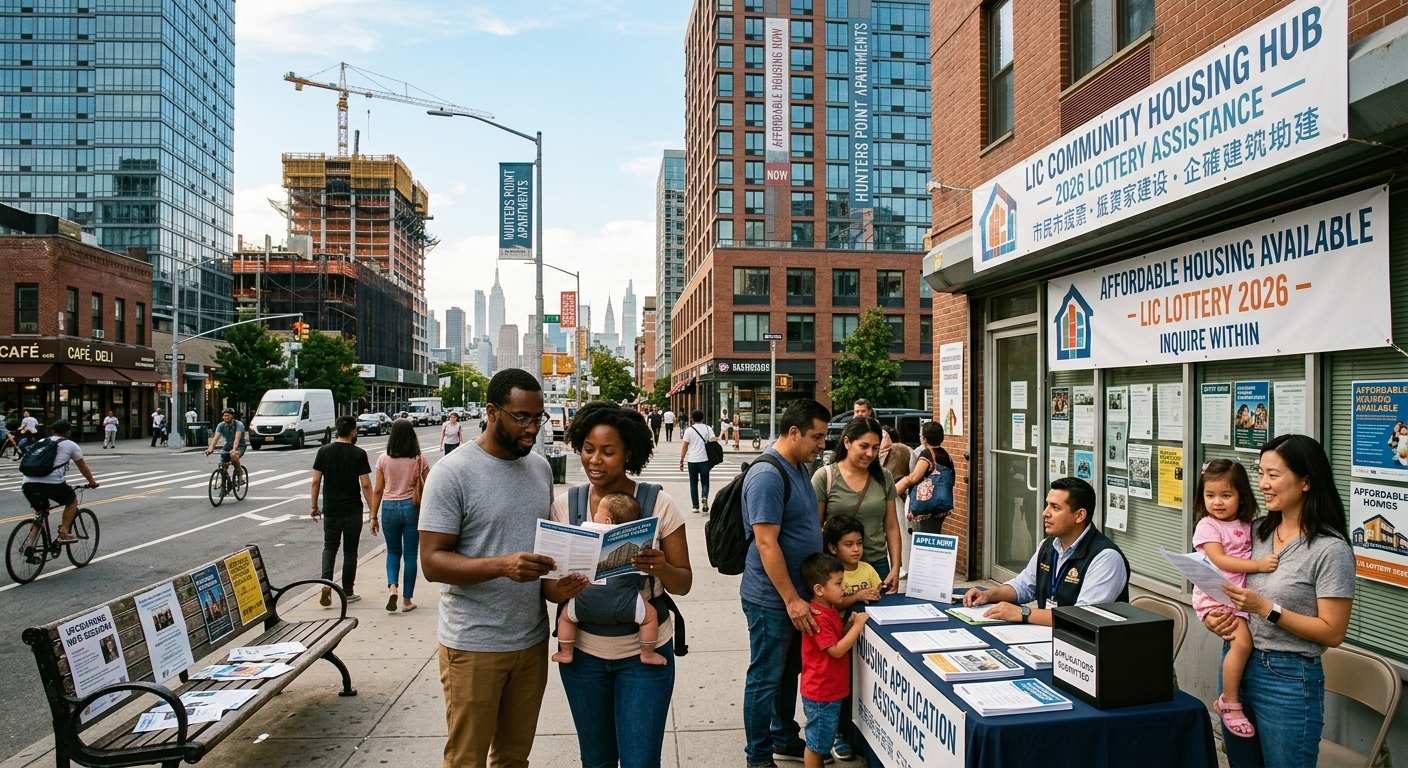
The Long Island City Housing Lottery Application Guide 2026 serves to inform prospective tenants navigating affordable housing opportunities in Long Island City, New York. Managed by various nonprofit and government agencies, these lotteries allocate income-restricted units through randomized selection. While selection offers a chance to apply, applicants must meet strict eligibility criteria related to income and household size, as well as provide necessary documentation to qualify. Recent initiatives, such as the OneLIC Neighborhood Plan, aim to deliver approximately 15,000 new homes, including about 4,350 income-restricted units, under the city’s Mandatory Inclusionary Housing (MIH) program. The MIH framework mandates that a percentage of new private developments remains affordable for low- and moderate-income households.
Application Process and Eligibility
Applicants must verify that they meet specific income and household size requirements, which are detailed in each development’s listing. The area’s 2026 Area Median Income (AMI) is set at $120,800 for a family of four, impacting income eligibility for various tiers ranging from 30% to 130% AMI. Certification of income is essential and managed by the Housing Development Corporation (HDC) to ensure compliance. However, applicants may face significant challenges due to strict documentation criteria, multi-deadline schedules, and potential disqualification stemming from incomplete applications. Notably, many applicants find themselves disqualified due to income changes or missing documentation during the lottery log review process. Keeping abreast of deadlines, such as the May 18, 2026, application deadline, is crucial for maintaining eligibility.
Challenges in the Application System
The absence of a centralized application platform, in contrast to New York City’s Housing Connect portal, complicates the application process. Prospective tenants must navigate multiple lotteries and waitlists, which can lead to confusion and missed opportunities, especially when reopening waits or new units become available. Time constraints further exacerbate challenges; applicants selected in the lottery must submit documentation often within a narrow time frame, creating difficulties for those with less access to required proofs or those facing language barriers. Additionally, the reliance on individual property owners for managing applications can result in inconsistencies and variations in information dissemination, contributing to an uneven experience across different developments.
Regulatory Oversight and Fairness
Oversight from agencies like the New York City Department of Housing Preservation and Development (HPD) and the Housing Development Corporation (HDC) ensures adherence to fairness and compliance in the application process. Legal protections exist against discriminatory practices, including issues of source-of-income discrimination, with ongoing enforcement efforts to uphold tenant rights. Nevertheless, applicants are advised to remain vigilant against potential landlord retaliations or unfair practices, particularly in the context of evolving tenant protection laws that emerged between 2019 and 2026. Successful applicants often need to navigate complex legal environments related to housing and occupational laws, which are crucial for defending their rights throughout the tenancy application process.
Types of Available Housing Units
Long Island City presents a range of affordable housing options, including those available through lotteries, re-rentals, and other tax incentive programs. Income requirements vary significantly; some lotteries may offer units at rates as low as $764.57 per month. The integration of affordable units within larger market-rate developments often depends on municipal incentives, where 10% to 25% of units are designated for affordable housing. Additionally, households referred by agencies such as the Department of Homeless Services (DHS) often benefit from pre-qualification as income-eligible applicants, simplifying their entry into the housing lottery system. It’s essential for all applicants to review the specific guidelines associated with each listing rigorously to ensure compliance and maximize their opportunities.
The content is provided by Jordan Fields, Scopewires