Highlights
- Local football camps enhance youth skills while fostering teamwork and confidence in young athletes.
- Diverse camp options ensure every athlete finds the right program to meet their development goals.
Summary
Local football camps focus on developing youth athletes’ skills through structured training programs tailored to various age groups and skill levels. They offer opportunities from fundamental skill acquisition to advanced competition preparation. The types of camps include skill development, position-specific, and college prospect camps, catering to participants looking to improve their performance or gain recruiter visibility. Accessibility varies, with local camps emphasizing foundational skills and national camps attracting elite talent with high-level evaluations. Certified coaches deliver evidence-based instruction that prioritizes safety and fosters growth, while participation also cultivates social skills and teamwork, despite concerns about injury risks.
Types of Football Camps
Football camps enhance player development through distinct formats categorized into skill development, position-specific, and college-run camps. Skill development camps focus on refining techniques with non-contact drills for younger players. Position-specific camps tailor training to individual roles, promoting collaboration and competitive drills. College prospect camps and showcases provide wider exposure for athletes, offering intense competition and evaluations that may lead to recruitment.
Camp Levels
Camps can be local, state-level, or national:
- Local Camps: Accessible and community-based, ideal for initial skill-building.
- State-Level Camps: Offer higher competition and skilled coaches, attracting players from throughout the state.
- National Camps: Feature elite competition and significant scouting opportunities, attracting top talent from across the nation.
Age Groups and Skill Levels
Local football camps accommodate various age groups and skill levels, ensuring relevant instruction for all participants. Younger children (ages 5 to 7) focus on basic skills in a fun environment, while older youth (ages 8 to 10) experience more targeted training. Programs often group players by age and skill, supporting both beginners with fundamentals and advanced athletes preparing for high-level competition. Camps adhere to development models prioritizing fun and skill mastery without overwhelming young players.
Training Methodologies
Training methodologies at local football camps are diverse, emphasizing age-appropriate developmental needs. For younger players, activities foster enjoyment and basic skills, while older youth experience structured programs enhancing endurance and strength. Tactical training helps athletes understand game dynamics and improve decision-making skills through video analysis and scenario-based drills, promoting growth in competitive environments. Combining individual skill sessions with team training effectively enhances overall athletic development for all participants.
Typical Camp Activities
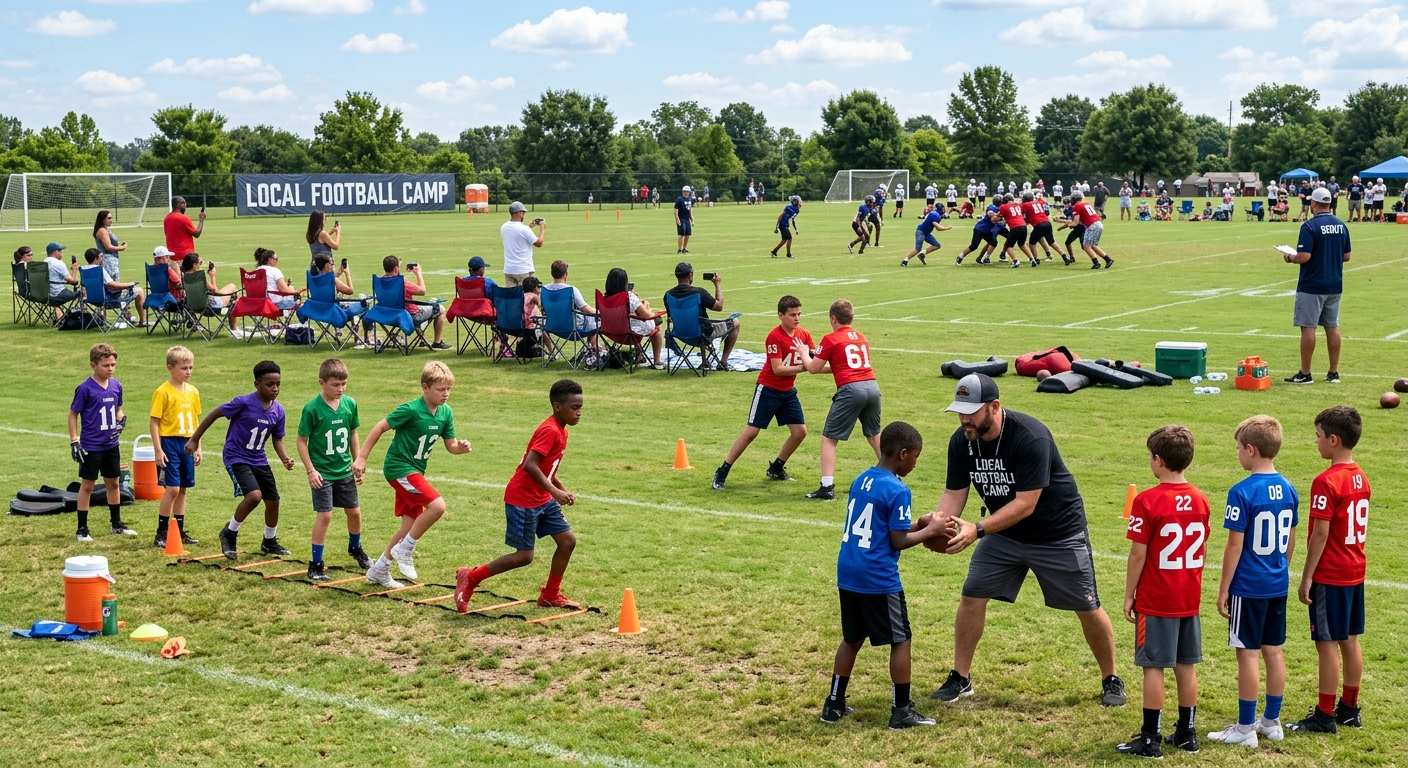
Camp activities include skill drills, physical conditioning, and competitive simulations customized for diverse skill levels. Activities may involve targeted skill enhancement drills for specific techniques and physical fitness components like strength training and agility. Camps may vary in their approach to contact, with some focusing on non-contact practice, while competitive scenarios foster readiness by simulating game situations. Some camps also integrate academic support and personal development into their programs.
Locations and Facilities
Local camps utilize varied venues, including sports complexes and training academies equipped for comprehensive football training. Many camps take place at university facilities, providing athletes access to high-quality resources and accommodating venues. Facilities ensure accessibility, meeting the needs of all participants while optimizing training conditions.
Coaches and Instructional Staff
The success of local football camps relies on certified, experienced coaching staff who emphasize adaptability and player development. Coaches often include successful former players and professionals, providing valuable insights and mentorship. Instructional strategies are tailored to match participant skill levels, ensuring beginners gain foundational skills while advanced athletes prepare for collegiate recruitment, with a focus on building both technical and tactical understanding.
Duration, Costs, and Accessibility
Duration of local football camps ranges from single sessions to multi-week programs, with costs varying significantly. Local camps typically charge between $150 and $300, while national showcases can reach several hundred dollars, incorporating additional amenities and services. Financial aid options are often available but limited, making it prudent for families to explore potential support early in the enrollment process. Evaluating the overall accessibility of camps is crucial, encompassing routes, accommodations, and inclusion strategies.
Connection to Youth Academies and Competitive Leagues
Local camps establish important connections to youth academies and competitive leagues, offering foundational skills necessary for more serious competition. Unlike shorter camps, academies provide year-round training designed for dedicated athletes, emphasizing gradual progression in a structured environment. Training at these academies focuses on age-appropriate methodologies to ensure that athletes are equipped to advance seamlessly into leagues, benefiting from the holistic development offered by both camps and academies.
Benefits of Participating
Participating in local football camps supports multiple aspects of youth development, fostering friendships and a sense of community. Camps encourage discipline and teamwork as children learn to work collaboratively while practicing. Physically, football enhances cardiovascular fitness and motor skills, while psychological benefits emerge through boosted self-esteem and confidence. The structured environment nurtures cooperation and social skills, helping participants grow positively in both sport and life.
Safety, Risks, and Health Considerations
While youth football provides valuable benefits, inherent risks necessitate stringent safety measures. Continuous injury monitoring and education about potential risks are essential for informed participant decisions. Local camps often prioritize gradual skill introduction and modified drills to enhance safety and mitigate injury potential. However, ongoing concerns about concussions highlight the importance of balanced training, emphasizing the need for varied athletic experiences to reduce overuse injuries.
Choosing and Evaluating Football Camps
When selecting a football camp, alignment with an athlete’s goals is crucial. Evaluating coaching credentials and assessing program impact through testimonials can provide insight into quality. Diverse camp formats cater to different needs and aspirations, ranging from localized training to intensive residential programs. Transparency about costs, supported activities, and program intensity enables families to make informed choices about options that best suit their athlete’s current and future development needs.
The content is provided by Harper Eastwood, Scopewires