Highlights
- Ensuring compliance with regulations is crucial for safe medical supply transport in personal vehicles.
- Implementing robust training and vehicle modifications can significantly enhance transport safety and efficacy.
“`html
Summary
Transporting medical supplies using personal vehicles necessitates careful management of logistics, safety, and adherence to regulatory standards to ensure the integrity and timely delivery of healthcare materials. This practice is common among healthcare providers and smaller medical facilities when specialized transport options are unavailable. Given the sensitivity of medical products, such as pharmaceuticals and biological samples, ensuring their safety and efficacy during transport is critical. Compliance with regulations from agencies like the FDA, DOT, and CDC is essential, covering aspects such as packaging, driver qualifications, and vehicle requirements.
Legal and Regulatory Considerations
Transporting medical supplies entails strict compliance with various legal and regulatory demands to guarantee safety and product integrity. In the U.S., the FDA establishes that medical devices must be handled in a way that prevents contamination. The DOT outlines guidelines for hazardous materials, requiring specific handling, labeling, and transportation protocols. Individuals using personal vehicles must also maintain valid driver’s licenses and appropriate liability insurance. Regular inspections of medical supplies before transport are crucial, as is the necessity for proper training on handling protocols and emergency responses. Non-compliance can result in severe legal consequences and jeopardize patient safety.
Vehicle Preparation and Requirements
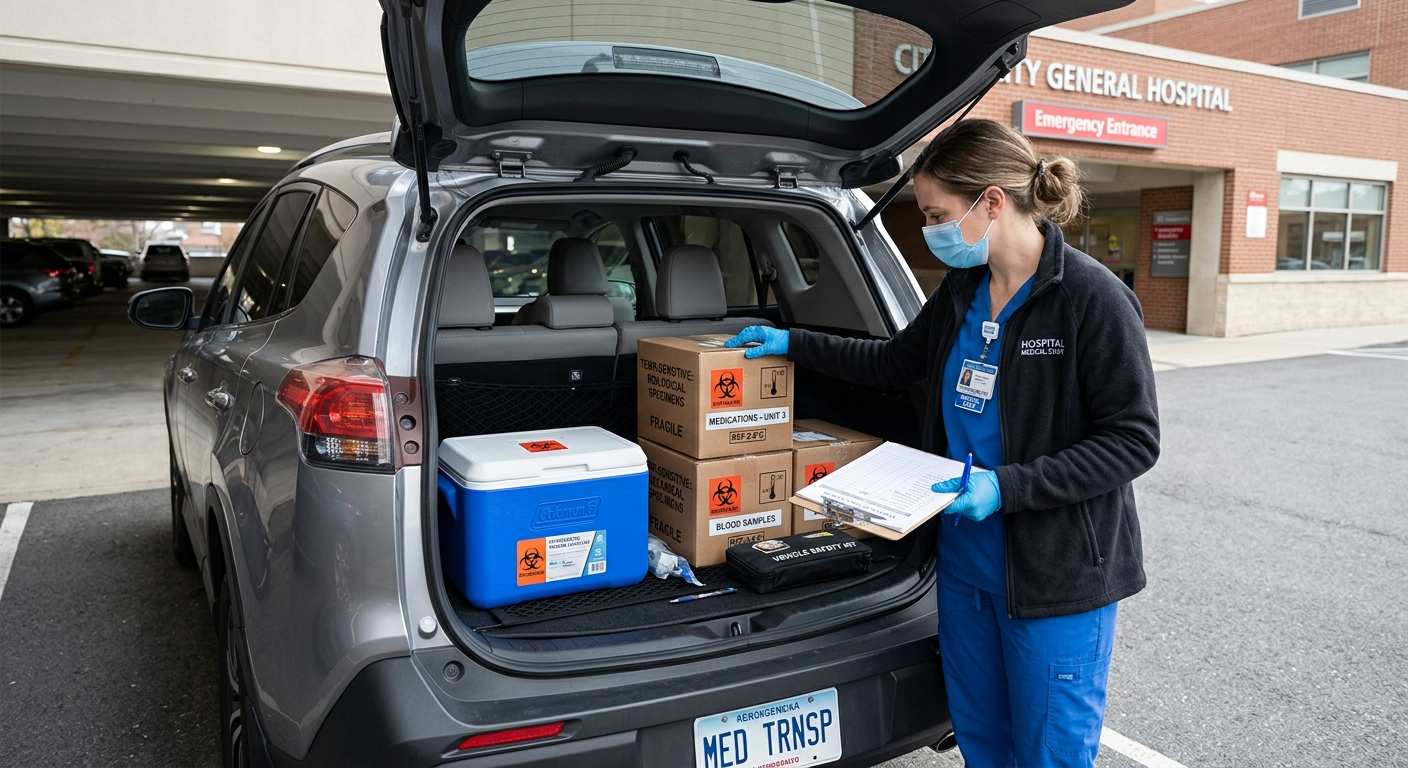
Proper vehicle preparation is vital for safely transporting medical supplies. Ideal vehicles should feature lift gates, padded interiors, and adjustable tie-down systems to secure equipment during transit. Regular cleaning protocols must be implemented to prevent contamination, especially when multiple shipments are conducted. The workforce involved in transport should receive specialized training in contamination prevention, equipment handling, and emergency management. Vehicle maintenance, including checks on functional features, is essential for safe operation, requiring adherence to manufacturer specifications for modifications.
Packaging Medical Supplies for Transport
Effective packaging is critical to ensuring medical supplies remain safe and compliant during transport. Supplies must be categorized based on sensitivity, such as temperature-sensitive items requiring specific packaging materials like insulated containers. Protective measures against environmental conditions like shocks and temperature variations are necessary to maintain product integrity. Packaging that meets regulatory standards is also vital for the safe transport of hazardous materials. There should be a system for documenting and tracing all packaged medical supplies, minimizing contamination risks.
Transportation Procedures and Best Practices
Adhering to established procedures and best practices during transportation enhances the safety, integrity, and efficacy of medical supplies. Key practices involve maintaining stable environmental conditions, effectively securing cargo, and ensuring personnel are trained in handling techniques. Planning delivery routes to minimize disruptions is crucial, especially for sensitive shipments requiring expedited handling. Furthermore, thorough documentation and clear communication channels among personnel are essential for accountability and swift responses to arising challenges.
“`