Highlights
- Fiberglass pools offer low-maintenance, durable solutions for diverse outdoor aesthetics.
- Enjoy quick installation and customizable features by choosing a fiberglass pool today!
Overview of Fiberglass Pools
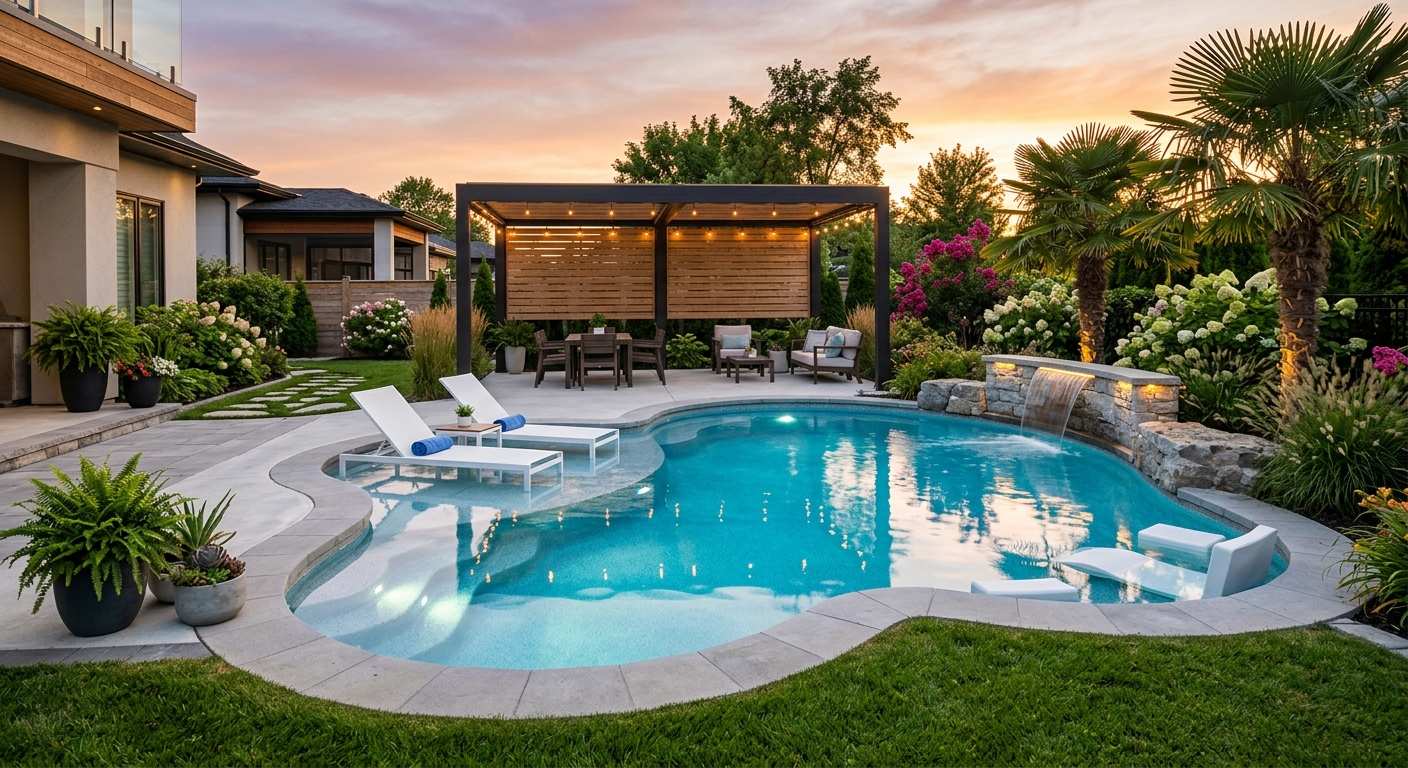
Fiberglass pools are pre-manufactured, one-piece shells made from fiberglass-reinforced resin. They provide a durable and low-maintenance alternative to traditional concrete or vinyl liner pools, gaining popularity for their quick installation, aesthetic versatility, and resistance to algae. Available in a range of shapes—such as freeform, geometric, Roman-end, kidney-shaped, and plunge pools—and sizes, they can fit various backyard spaces. Typically, sizes range from compact models (about 10×24 feet) to expansive designs (over 40 feet) with depths varying from 3 to 8 feet. Built-in features, such as tanning ledges and LED lighting, enhance usability and safety.
Design and Customization Options
Fiberglass pools come in diverse shapes and sizes tailored to aesthetic preferences and functional needs. Popular options include:
- Free-form Pools: Offer natural, informal looks with curved lines.
- Roman-End Pools: Feature rectangular shapes with arched ends, combining classical and modern styles.
- Kidney-Shaped Pools: Space-efficient design that maximizes swimming area.
- Geometric Pools: Clean, sharp designs ideal for lap swimming.
- Plunge Pools: Compact pools designed for limited spaces.
Customization of fiberglass pools can include features like slip-resistant steps, benches, tanning ledges, and advanced controls for lighting systems. The choice of colors and finishes—from standard gelcoats to premium textures—further enhances the aesthetic appeal and longevity of the pools.
Installation Process and Considerations
The installation of fiberglass pools follows several planned steps. Initially, permits are obtained, and the excavation area is marked to identify potential site issues. Excavation typically takes three days, followed by creating a stable base with compacted gravel. The pool shell is delivered and positioned accurately in the excavation site with the help of a crane. Installation also involves fitting plumbing and filtration systems, ensuring that the structural integrity is maintained throughout the process. Safety features, such as proper fencing and secure walkways, are incorporated to enhance usability while adhering to regulations.
Maintenance and Durability
Fiberglass pools are renowned for their durability and low maintenance requirements. Their smooth, non-porous surface resists cracking and reduces algae growth, translating into less frequent cleaning. Routine maintenance involves checking water chemistry, regular cleaning, and visual inspections for any signs of wear. The compatibility of fiberglass with saltwater systems reduces the need for chemical treatments and leads to a gentler swimming experience. Moreover, manufacturers often provide lifetime warranties against issues like osmosis, highlighting the robust nature of these pools compared to concrete alternatives.
Cost Considerations
Investing in a fiberglass pool requires careful budgeting, with costs often ranging from $40,000 to over $120,000 based on size and customization options. Key factors influencing price include the pool’s dimensions, depth, and finish selections, with larger and more premium designs requiring a higher investment. Flexibility in installation options, including DIY possibilities, can help manage costs. Pool cost estimators may assist in planning different customizations to achieve the desired balance of quality and affordability while enhancing property value.