Highlights
- Epoxy floor paints deliver exceptional durability and versatility for various environments.
- Proper selection and preparation ensure long-lasting and effective floor protection solutions.
Summary
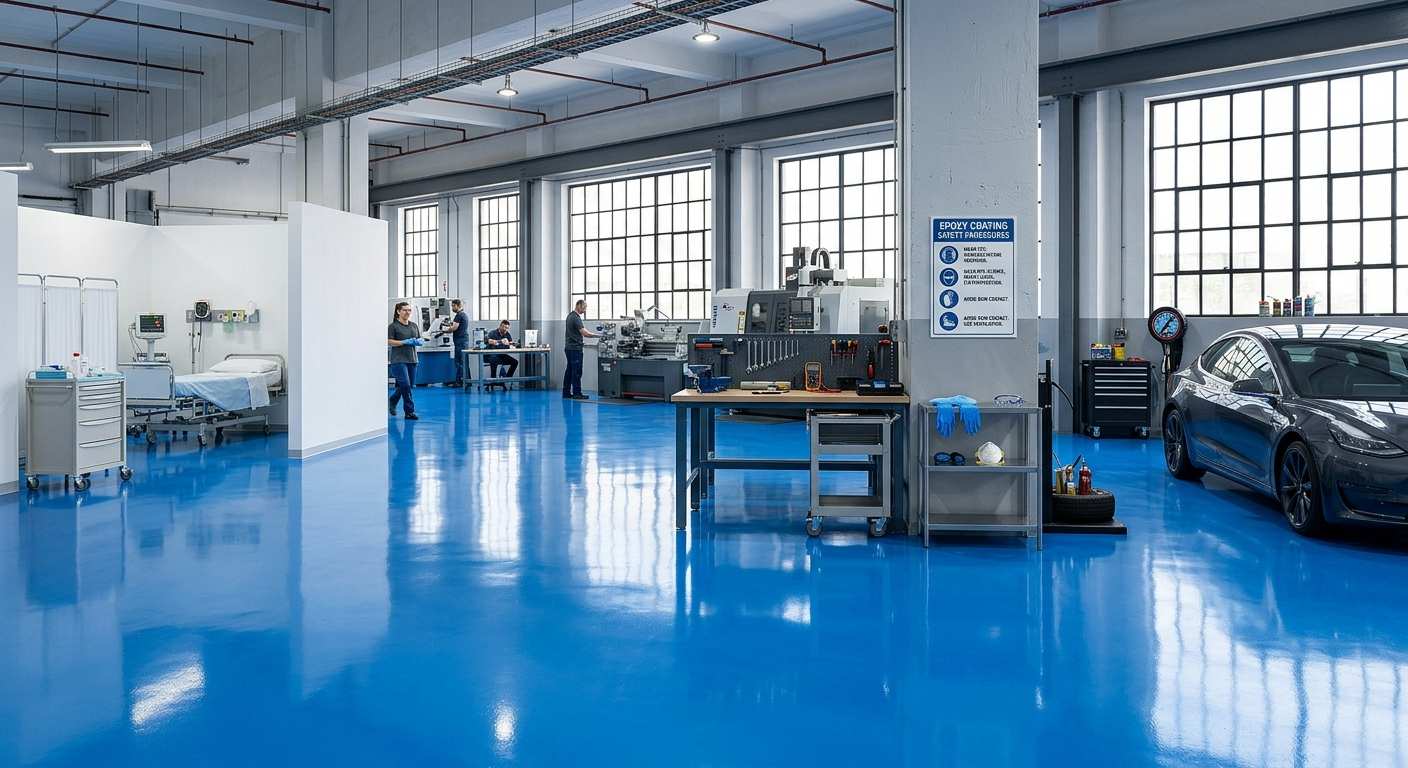
Epoxy floor paint is a durable coating derived from epoxy resins and curing agents, creating protective surfaces for various flooring applications, including residential, commercial, and industrial settings. This versatile solution is resistant to wear, moisture, and chemicals, making it ideal for environments like warehouses and healthcare facilities, where both function and aesthetic appeal are important. Various formulations exist, including water-based, solvent-based, and 100% solids systems, each with unique advantages that depend on application conditions and durability requirements.
Surface Preparation and Application
Effective surface preparation is crucial for optimal adhesion and performance of epoxy coatings. The substrate must be cleaned from contaminants like dust, grease, and previous coatings, commonly using methods such as scarifying, acid etching, or mechanical abrasion. Insufficient preparation is a major cause of coating failure. Following preparation, various application methods—spraying, rolling, or brushing—may be employed, each tailored to the size and detail of the area being coated. Proper application ensures even coverage and thickness, which are essential in maintaining the desired performance characteristics of the epoxy floor.
Types of Epoxy Floor Paints
Epoxy floor paints come in several formulations tailored to specific needs:
- Solvent-Free and Solvent-Based: Solvent-free options provide thicker, durable coatings, while solvent-based types are easier to apply but may sacrifice durability.
- 100% Solids: These offer high durability and chemical resistance without VOC emissions but usually require professional application due to rapid curing times.
- Water-Based: Easier to apply and lower in odor, these are suitable for DIY projects but typically lack the durability of their solvent-free or solid counterparts.
- Specialty Coatings: Includes self-leveling and antistatic types for specific industrial applications, each with tailored performance characteristics.
Performance Characteristics and Limitations
The performance of epoxy floor paints varies by type and formulation, with factors such as curing agents influencing key characteristics like mechanical strength and chemical resistance. Curing agents, such as amines and anhydrides, play a vital role in determining the final product’s properties. Though epoxy coatings excel in many aspects, they may face limitations concerning UV stability, often yellowing when exposed to sunlight, and may require additional topcoats for protection in outdoor applications. Their abrasion resistance can lag behind polyurethane alternatives, necessitating careful consideration for high-traffic areas.
Safety and Environmental Considerations
Safety is a significant concern during the handling of epoxy floor coatings due to the potential emission of VOCs and hazardous vapors. Proper personal protective equipment (PPE) is essential during application to mitigate health risks. Environmental conditions, including moisture levels within the substrate, must be evaluated to guarantee adequate adhesion and performance. High-quality epoxy systems may offer excellent chemical resistance, but their longevity can be compromised in harsher environments, especially in cases of inadequate preparation or exposure to extreme conditions.
The content is provided by Sierra Knightley, Scopewires