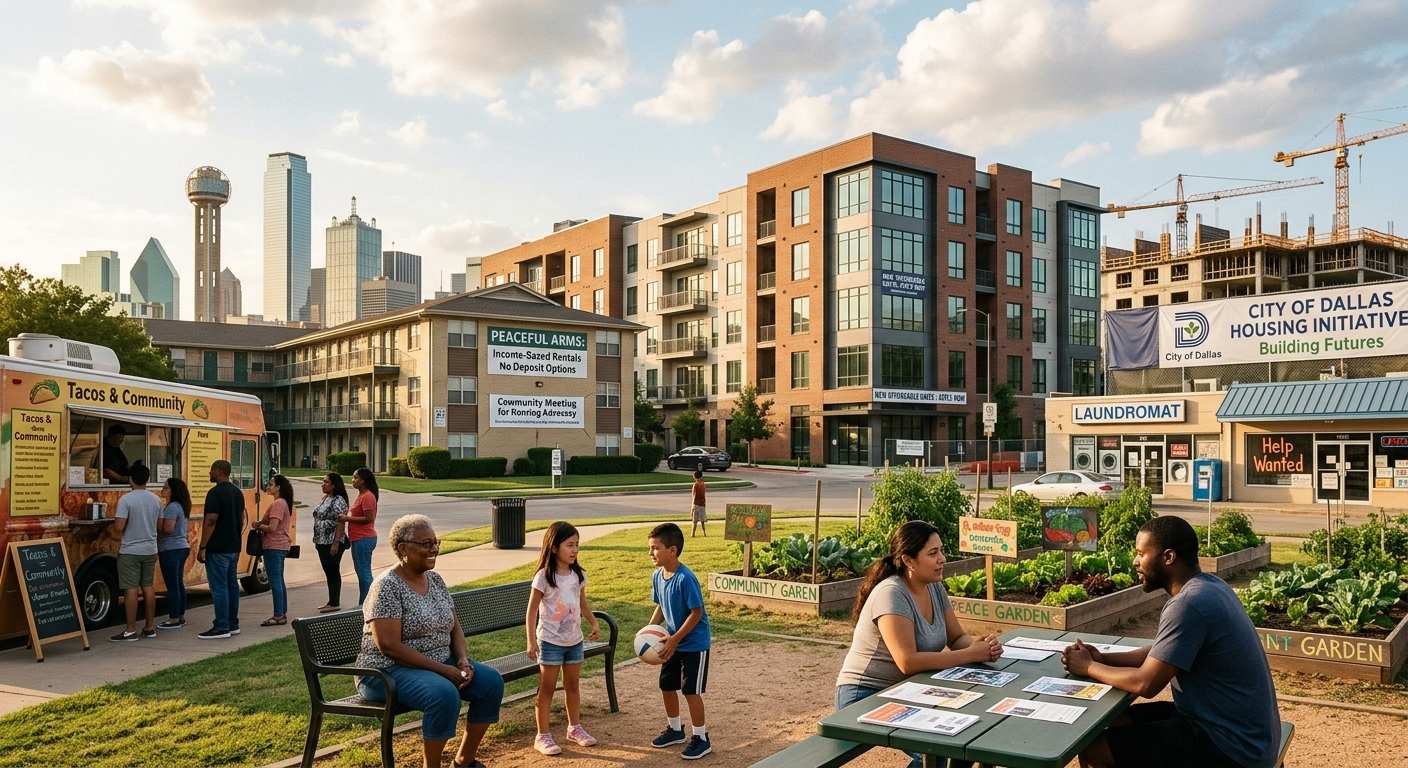
Highlights
- Dallas offers over 34,000 affordable housing units, but the demand still exceeds supply.
- New no deposit apartments are making housing more accessible for financially vulnerable renters.
Dallas Affordable Housing Landscape
Dallas, Texas, is confronting a pressing shortage of affordable housing, with low-income families allocating an excessive portion of their income to rent. As of 2026, the city provides around 9,289 income-based apartments, where tenants typically pay up to 30% of their income towards rent and utilities, in addition to 25,628 rent-subsidized units maintaining affordability without direct rental assistance. The effectiveness of these housing solutions depends on federal, state, and local programs, notably the Low Income Housing Tax Credit (LIHTC) and initiatives administered by the Texas Department of Housing and Community Affairs (TDHCA), which establish guidelines on income and rent limits for sustained affordability.
Challenges and Systemic Issues
The affordable housing crisis in Dallas is compounded by the loss of approximately 12,000 affordable units in recent years and growing competition among very low-income households for available accommodations. Families, particularly seniors, single-parent households, and minority renters, are disproportionately affected, often spending over half their income on housing. Although Dallas tenants possess legal protections concerning security deposits, repairs, and landlord retaliation, systemic challenges require ongoing advocacy and assistance from community organizations to alleviate housing instability.
Strategies for Accessing Affordable Housing
To improve access to affordable housing, various strategies are in place, including no deposit apartments that reduce upfront costs for financially vulnerable renters. These units often arise through subsidized programs like Section 8, which waive traditional security deposit requirements. While avenues exist, such as the Dallas Housing Authority’s Housing Choice Voucher program, the competition for these units remains high. Prospective renters can explore listings on platforms like Apartments.com for affordable options across the city, increasing their chances of finding suitable living spaces based on their needs.
Tenant Protections and Legal Framework
Tenants in Dallas benefit from robust legal protections under Texas law, which ensures timely return of security deposits and mandates landlords to maintain habitable conditions. Despite these safeguards, systemic barriers can obstruct tenants’ rights enforcement, particularly for low-income renters facing financial pressures. Initiatives that provide tenant education, legal aid, and comprehensive notifications of tenant rights at lease signing are crucial for alleviating these barriers and enhancing tenant empowerment. Advocacy efforts emphasize the importance of community support services in enabling access to resources that can prevent evictions and support housing stability.
Future Prospects for Affordable Housing
The future of affordable housing in Dallas, projected for 2026, is influenced by ongoing investments and policy reforms aimed at improving accessibility and sustainability of housing options. The City of Dallas has approved initiatives such as the Dallas Housing Opportunity Fund to finance residential projects that incorporate affordable units, aligning with the Tax Increment Financing (TIF) requirements. However, persistent demand pressures and rising home costs necessitate continued efforts and awareness to ensure housing equity and meet the needs of vulnerable populations in the coming years.