Highlights
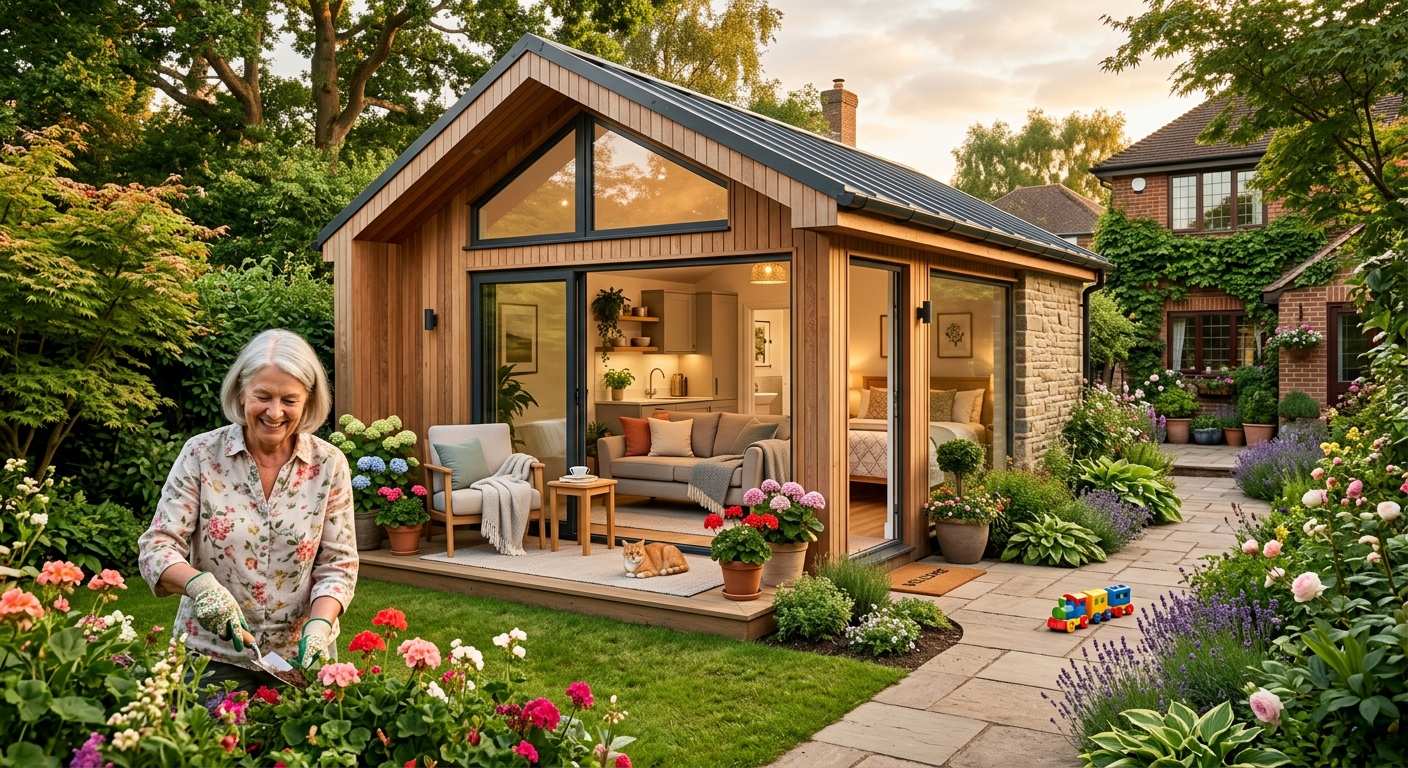
- Granny annexes provide ideal independent living solutions for aging family members.
- These units promote well-being and autonomy while maintaining family connections at home.
Overview of Granny Annexes
Granny annexes, also known as granny flats or accessory dwelling units (ADUs), are self-contained living spaces situated within or adjacent to a main residential property, primarily intended for independent accommodation of elderly family members. Equipped with essential amenities such as a bedroom, kitchen, bathroom, and living area, these units support both the autonomy of seniors and the closeness to family. The increasing appeal of granny annexes corresponds with demographic shifts, rising costs of care homes, and the push for more affordable housing options. Furthermore, policy reforms that ease zoning restrictions have facilitated their growth, positioning granny annexes as a viable solution for seniors wishing to age in place comfortably.
Social and Emotional Benefits
Granny annexes provide significant social and emotional advantages for elderly residents by balancing their need for privacy with the support of family members close by. This arrangement can help reduce feelings of loneliness and enhance overall well-being, aligning with cultural practices in regions where multigenerational living is common. However, challenges persist regarding legal ownership, planning permissions, and ensuring the safety of residents from potential elder abuse within family settings. Despite these challenges, granny annexes represent an evolving approach to elder care that champions independence while addressing social connectivity.
Design and Accessibility Considerations
The design of granny annexes increasingly emphasizes universal accessibility principles to cater to the changing needs of elderly occupants. Key features include single-level layouts that eliminate stairs, wider doorways for mobility aids, and accessible entrances. Modular designs offer further customization to integrate advanced safety features and smart home technologies tailored to individual occupant needs. Such adaptations not only enhance safety but also foster a supportive living environment for caregivers and visitors, promoting a sense of independence for seniors.
Legal and Regulatory Factors
Granny annexes are subject to varying legal and zoning regulations that dictate their construction and use. While some jurisdictions allow for informal placement without formal planning consent if occupants remain part of the household, separate living accommodations typically require official approval. Recent reform efforts have aimed to streamline these processes, promoting the construction of ADUs, yet compliance with local building codes and broader zoning laws remains essential. Adhering to these regulations ensures that granny annexes meet necessary safety and health standards, critical for the well-being of senior residents.
Future Trends and Economic Aspects
Looking forward, the future of granny annexes appears promising as social dynamics, economic considerations, and advancements in building technologies converge to support their development. Rising property prices and an aging population create a favorable environment for these living solutions. Furthermore, changes in zoning laws and legislative reforms are aimed at increasing the supply of affordable housing options, thereby enhancing the viability of granny annexes as practical alternatives to traditional care homes. Although they may not replace need for intensive medical care, granny annexes increasingly reflect shifting societal attitudes toward elder living arrangements and the prioritization of family care.
The content is provided by Sierra Knightley, Scopewires