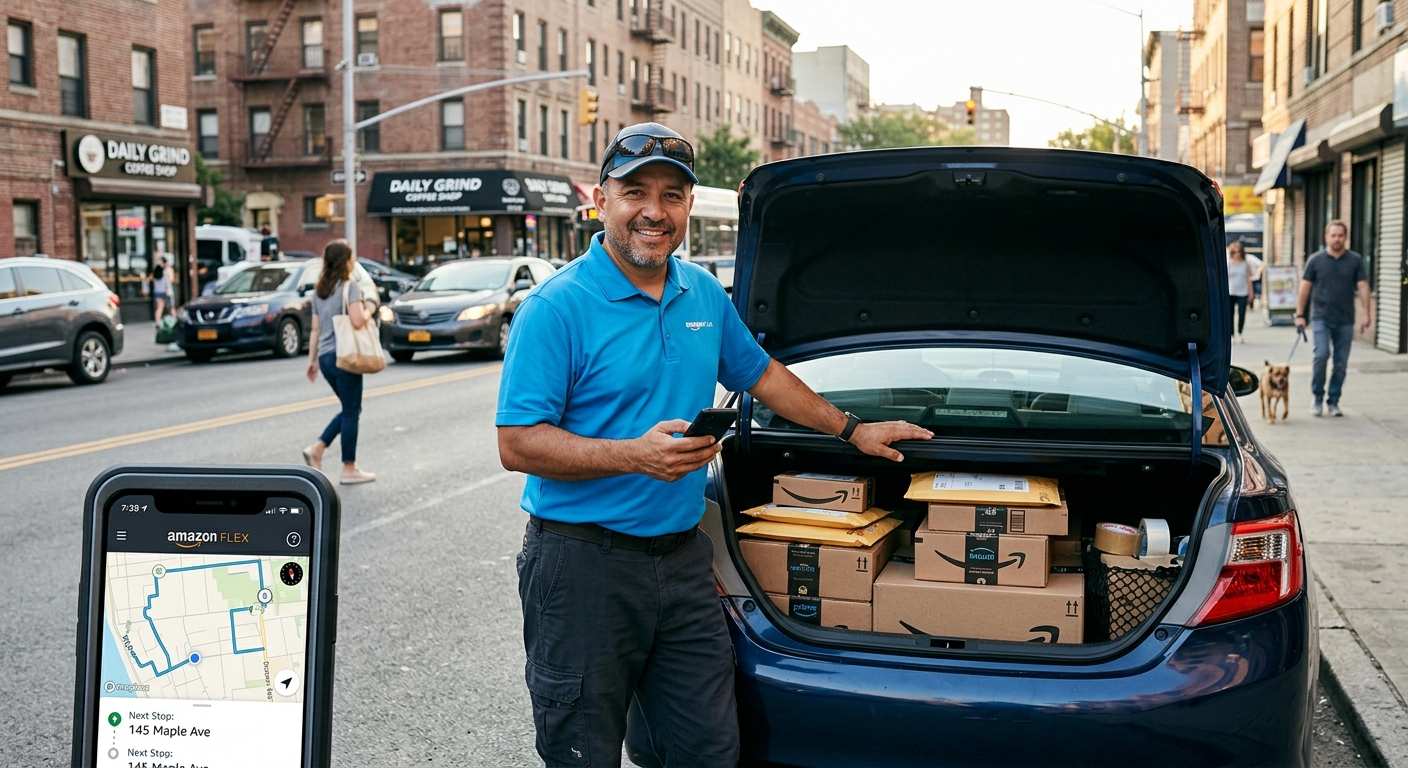
Highlights
- Amazon Flex drivers enjoy flexible earning opportunities using their personal vehicles.
- Knowledge of driver requirements and vehicle qualifications is essential for successful application.
Summary
The Amazon Flex program allows individuals to deliver packages using their personal vehicles, providing flexible earning opportunities. To qualify, applicants must meet specific criteria covering driver age, background checks, vehicle standards, and insurance. Understanding these requirements can help potential drivers gauge their eligibility and insurance coverage needs effectively.
Driver Requirements
Applicants for Amazon Flex must be at least 21 years old and possess a valid U.S. driver’s license, with a comprehensive background check required to assess driving and criminal history. While serious offenses like a listing on the national sex offender registry result in automatic disqualification, minor infractions may not impede approval. Awareness of potential background report errors is essential, as these could impact eligibility.
Personal auto insurance must meet or exceed state minimum standards, and drivers should remember that Amazon’s coverage does not extend outside active delivery periods. Therefore, leveraging rideshare insurance may be prudent for additional protection. The smartphone requirement for app functionality indicates the need for current technology, which could entail additional expenses.
Vehicle Qualifications
Vehicles for Amazon Flex deliveries must be four-door models, including sedans, SUVs, and vans, but not two-door vehicles or motorcycles. Typically, cars must be model year 2005 or newer; however, regional differences may apply, especially in stricter markets like New York City. Ensuring the vehicle is in good condition is vital to avoid disqualification and delays.
For larger grocery deliveries, drivers are encouraged to opt for vehicles with greater cargo capacity to optimize their efficiency and increase potential earnings. Proper registration and insurance documentation are also essential for compliance and operational integrity.
Application Process
Applying to become an Amazon Flex driver is done online and requires providing personal details, including a valid driver’s license and vehicle information. Applicants must ensure they meet set eligibility criteria, including vehicle qualifications and insurance requirements, to avoid unnecessary delays in approval. Once entered into the system, the process includes granting app permissions essential for navigation and delivery performance.
Approval times for background checks can vary significantly, potentially affecting when a driver can begin working. Keeping documentation current minimizes the risk of deactivation or compliance issues for active drivers.
Operating Guidelines
Effective delivery performance relies on compliance with operational procedures, including maintaining a smartphone that runs the necessary app. Drivers should also consider factors like fuel efficiency when selecting a vehicle, which can impact overall earnings from deliveries.
In case of accidents, drivers must prioritize safety and report incidents through the app. Recording details meticulously will assist in claims and may improve safety outcomes during deliveries.
Compensation and Benefits
Compensation in the Amazon Flex program is based on delivery blocks, with insurance coverage provided only during these periods. Hence, having personal insurance remains crucial to ensure adequate protection. Earnings may fluctuate depending on various factors, making ongoing financial awareness important for drivers.
Regional Variations in Requirements and Policies
Driver and vehicle requirements can differ significantly across regions, influenced by local regulations. While general vehicle eligibility persists, be conscious of specific local mandates, especially in more regulated markets that enforce strict compliance. Confirming vehicle and insurance qualifications is vital before starting the application process to avoid complications later.
Challenges and Criticisms
Driver challenges include strict vehicle guidelines and potential issues with background check processes, which can lead to delays or denials. Understanding these criteria and being proactive can mitigate the impacts of errors on driver eligibility. Insurance requirements also present a financial burden, with necessary riders potentially increasing costs.
Legal challenges around the classification of drivers as independent contractors raise critical questions regarding labor rights, reflecting wider issues within the gig economy. As drivers navigate these complexities, awareness and persistence in addressing potential disputes are vital to ensure fair treatment and proper compensation. Drivers may also engage in procedural routines that emphasize the structured nature of this work environment.