Highlights
- Innovative air conditioning systems eliminate outdoor units, enhancing aesthetics and installation flexibility.
- Eco-friendly refrigerants and heat pump technology drive sustainability in modern cooling solutions.
Overview of Air Conditioning Systems Without Outdoor Units
Air conditioning systems without outdoor units eliminate the need for traditional bulky external components, offering streamlined cooling solutions for various applications. These systems, including portable air conditioners and monoblock units, integrate all essential parts within a single indoor unit, allowing for flexible installation without exterior modifications. They are ideal for environments where outdoor installation is limited, such as urban settings or historic buildings, while maintaining architectural aesthetics and providing effective climate control.
Key Types and Technologies
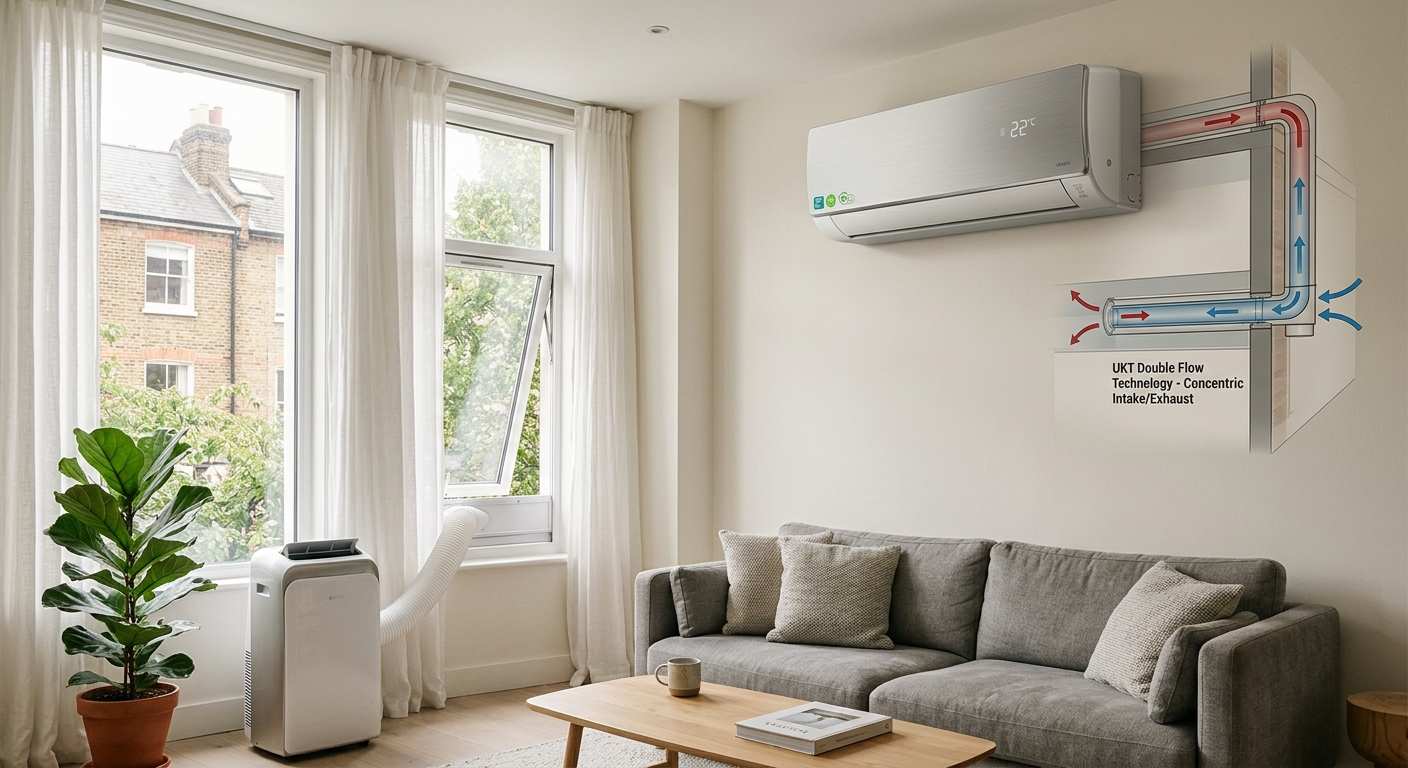
The main categories of air conditioning systems without outdoor units encompass portable air conditioners, monoblock units, and innovative technologies like the UKT Double Flow. Portable units are mobile and suitable for temporary cooling but may generate more noise and require regular maintenance. Monoblock systems provide higher efficiency by housing all components indoors and typically vent heat through a drilled wall, although they present noise challenges as well.
UKT Double Flow Technology utilizes a single wall penetration for air intake and exhaust through concentric tubes, effectively cooling the compressor without an outdoor unit. Ductless mini-split systems, though generally requiring an outdoor component, often find adaptations that minimize or conceal external units, allowing for flexible design. Additionally, evaporative cooling systems provide an alternative by leveraging water evaporation for cooling, but their effectiveness is contingent on environmental conditions.
Installation and Maintenance Considerations
When choosing air conditioning systems without outdoor units, installation simplicity and costs are critical evaluation factors. Portable air conditioners feature straightforward installation requiring only venting, while monoblock and UKT systems necessitate wall penetrations, which may require professional assistance. Installation costs for systems like mini-splits can vary significantly, ranging from $2,000 to $14,500, highlighting the need for careful assessment of budget and performance capabilities.
Maintenance requirements also differ significantly; portable units require regular filter cleaning and drainage management, while monoblock systems may need periodic checks on heat expulsion mechanisms. Understanding these maintenance demands is crucial for ensuring optimal performance and longevity.
Energy Efficiency and Environmental Impact
Energy use is a vital concern for air conditioning systems, with global consumption in 2022 reaching approximately 2,100 terawatt-hours, yielding substantial carbon emissions. The efficiency ratings of units, such as those certified by Energy Star, are essential for minimizing environmental effects and evaluating energy-saving potential. Systems without outdoor units, like ductless mini-split systems, often outperform traditional central air systems by eliminating energy losses through ductwork.
Recent innovations are also driving the shift towards environmentally friendly options. The introduction of solid refrigerants with low global warming potential signifies a move towards sustainable cooling technologies, while ongoing advancements aim to improve unit efficiency and reduce overall greenhouse gas emissions associated with air conditioning.
Applications and Use Cases
Air conditioning systems without outdoor units serve diverse applications across residential, commercial, and industrial sectors. In residential settings, ductless mini-splits are favored for individualized zone control in spaces without existing ductwork, offering quiet and efficient cooling solutions. Portable air conditioners cater well to temporary needs, allowing users to adapt to varying cooling demands throughout the year.
In commercial and industrial environments, portable water-cooled systems address high-capacity cooling needs without outdoor components, making them suitable for facilities requiring precise temperature control. Their flexibility to operate without a significant outdoor footprint is particularly advantageous in densely populated urban areas or during specialized events.